
Post
The Future of Leather Boots: Innovation and Tradition
May
The Future of Leather Boots: Innovation and Tradition
Leather boots have endured for centuries because they combine practicality, durability, craftsmanship, and timeless style. From rugged workwear to luxury fashion, boots have continuously adapted to changing cultural trends and technological advancements while maintaining their core identity. Today, the leather boot industry stands at a fascinating crossroads where traditional shoemaking techniques meet modern innovation, sustainability demands, and rapidly evolving consumer expectations.
Modern buyers no longer evaluate boots solely on appearance. Comfort, environmental impact, customization, durability, and ethical production now influence purchasing decisions as much as craftsmanship and style. At the same time, consumers still value the authenticity and heritage associated with handcrafted leather footwear.
The future of leather boots will likely be shaped by a balance between preserving traditional craftsmanship and embracing technological progress. Rather than replacing classic bootmaking entirely, innovation is increasingly enhancing comfort, efficiency, sustainability, and personalization while respecting the enduring appeal of heritage design.
This evolving relationship between innovation and tradition is transforming the industry in exciting ways and ensuring that leather boots remain highly relevant in the modern world.
The Enduring Appeal of Leather Boots
Before exploring the future, it is important to understand why leather boots continue to maintain popularity despite constant changes in fashion and technology.
Leather boots remain valued because they offer:
- Long-term durability
- Timeless aesthetics
- Repairability
- Versatility
- Comfort that improves over time
- Emotional connection through wear and aging
Unlike disposable fashion items, quality boots often become deeply personal possessions. The leather molds to the wearer’s feet, develops unique patina, and reflects years of use and experience.
This emotional and practical connection explains why consumers continue investing in premium boots even in a rapidly changing retail environment.
The challenge for the future is not replacing this tradition but improving it responsibly and intelligently.
Advanced Comfort Technology
One of the most significant areas of innovation involves comfort enhancement. Traditional leather boots were often admired for durability but criticized for lengthy break-in periods and limited cushioning.
Modern technology is helping manufacturers improve comfort without sacrificing classic aesthetics.
Advanced Insole Systems
Innovative insole technologies now provide:
- Better arch support
- Enhanced shock absorption
- Pressure distribution
- Improved stability
- Reduced fatigue
Memory foam, gel cushioning, ergonomic orthotics, and adaptive support systems are increasingly integrated into premium boots.
These advancements allow wearers to enjoy traditional leather styles with significantly greater comfort during long hours of standing or walking.
Breathable Waterproof Technology
Historically, waterproof boots often sacrificed breathability, causing discomfort during extended wear.
Modern waterproof membranes now provide:
- Water resistance
- Moisture control
- Improved airflow
- Temperature regulation
Technologies similar to those used in outdoor performance footwear are increasingly being incorporated into leather boots.
This evolution makes boots more practical for modern lifestyles while maintaining traditional appearances.
Consumers no longer need to choose strictly between rugged weather protection and everyday comfort.
Innovative Sole Materials
Sole technology is also evolving rapidly.
Traditional leather soles remain admired for elegance and craftsmanship, but modern materials provide improved durability and functionality.
New sole innovations include:
- Lightweight rubber compounds
- Shock-absorbing midsoles
- Slip-resistant tread systems
- Flexible hybrid materials
- Energy-return cushioning
These advancements improve mobility and reduce fatigue without dramatically altering the visual identity of classic boot styles.
Many modern boots now combine heritage aesthetics with athletic-inspired comfort engineering.
Sustainable Materials and Environmental Innovation
Sustainability is becoming one of the most powerful influences shaping the future of leather boots.
Consumers increasingly demand transparency regarding:
- Material sourcing
- Environmental impact
- Ethical labor practices
- Waste reduction
In response, manufacturers are exploring both improved traditional leather production and entirely new material alternatives.
Lab-Grown and Bioengineered Leather
One of the most intriguing innovations involves lab-grown leather.
Biofabricated leather is produced using cellular agriculture techniques designed to create leather-like material without raising animals traditionally.
Potential advantages may include:
- Reduced environmental impact
- Lower water usage
- Less chemical waste
- Controlled material consistency
Although still developing, lab-grown leather may eventually become a viable option for environmentally conscious consumers seeking alternatives to conventional animal agriculture.
Mushroom-Based and Plant-Based Alternatives
Alternative materials derived from natural sources are also gaining attention.
Examples include:
- Mushroom mycelium leather
- Pineapple fiber materials
- Cactus leather
- Apple waste leather alternatives
These materials attempt to balance sustainability with durability and appearance.
While many alternatives still face challenges regarding long-term durability compared to traditional leather, innovation continues improving quality and performance.
The future may involve coexistence between premium traditional leather and advanced sustainable alternatives.
Digital Manufacturing and Precision Production
Technology is also transforming how boots are manufactured.
Digital tools improve efficiency, precision, and consistency while reducing material waste.
Computerized Cutting Systems
Computer-guided cutting machines optimize leather usage by:
- Minimizing waste
- Improving pattern accuracy
- Enhancing consistency
- Reducing production errors
This technology supports sustainability while maintaining high manufacturing standards.
3D Printing Applications
3D printing is beginning to influence footwear production in areas such as:
- Sole prototyping
- Custom components
- Personalized fit systems
- Structural experimentation
Although full leather boot production still relies heavily on traditional methods, additive manufacturing may increasingly support specialized customization and design innovation.
Human Craftsmanship Remains Essential
Despite technological advances, skilled craftsmanship remains irreplaceable in premium bootmaking.
Human expertise is still critical for:
- Leather selection
- Hand-finishing
- Stitching precision
- Last shaping
- Quality inspection
- Artistic detailing
Consumers continue valuing handcrafted products because they reflect individuality, authenticity, and traditional skill.
The most likely future is not fully automated bootmaking but hybrid production models combining digital precision with artisan craftsmanship.
Technology improves efficiency, but craftsmanship preserves soul and character.
Direct-to-Consumer Business Models
The retail structure of the boot industry is also evolving.
Traditionally, boots passed through multiple distribution layers:
- Manufacturers
- Distributors
- Retailers
- Department stores
Modern direct-to-consumer brands now connect manufacturers directly with buyers through online platforms.
Advantages of Direct-to-Consumer Models
This approach often allows brands to:
- Reduce pricing markup
- Improve transparency
- Communicate directly with customers
- Offer better customization
- Gather customer feedback quickly
Consumers benefit from potentially higher-quality products at more competitive prices compared to traditional retail systems.
Direct relationships between makers and customers also strengthen brand identity and trust.
Mass Customization and Personalized Fit
Customization is becoming increasingly important as consumers seek products reflecting individual preferences.
Future boot purchasing may involve extensive personalization options including:
- Leather color selection
- Sole type choices
- Width customization
- Personalized stitching
- Monogramming
- Arch support adjustments
Made-to-Order Production
Made-to-order manufacturing is also gaining popularity.
Rather than mass-producing inventory, some companies now build boots only after customer orders are placed.
Benefits include:
- Reduced waste
- Better inventory management
- Increased customization
- Improved sustainability
This model aligns closely with modern consumer preferences for unique, personalized products.
Advances in digital measurement and online fitting tools may make made-to-order boots increasingly accessible to wider audiences.
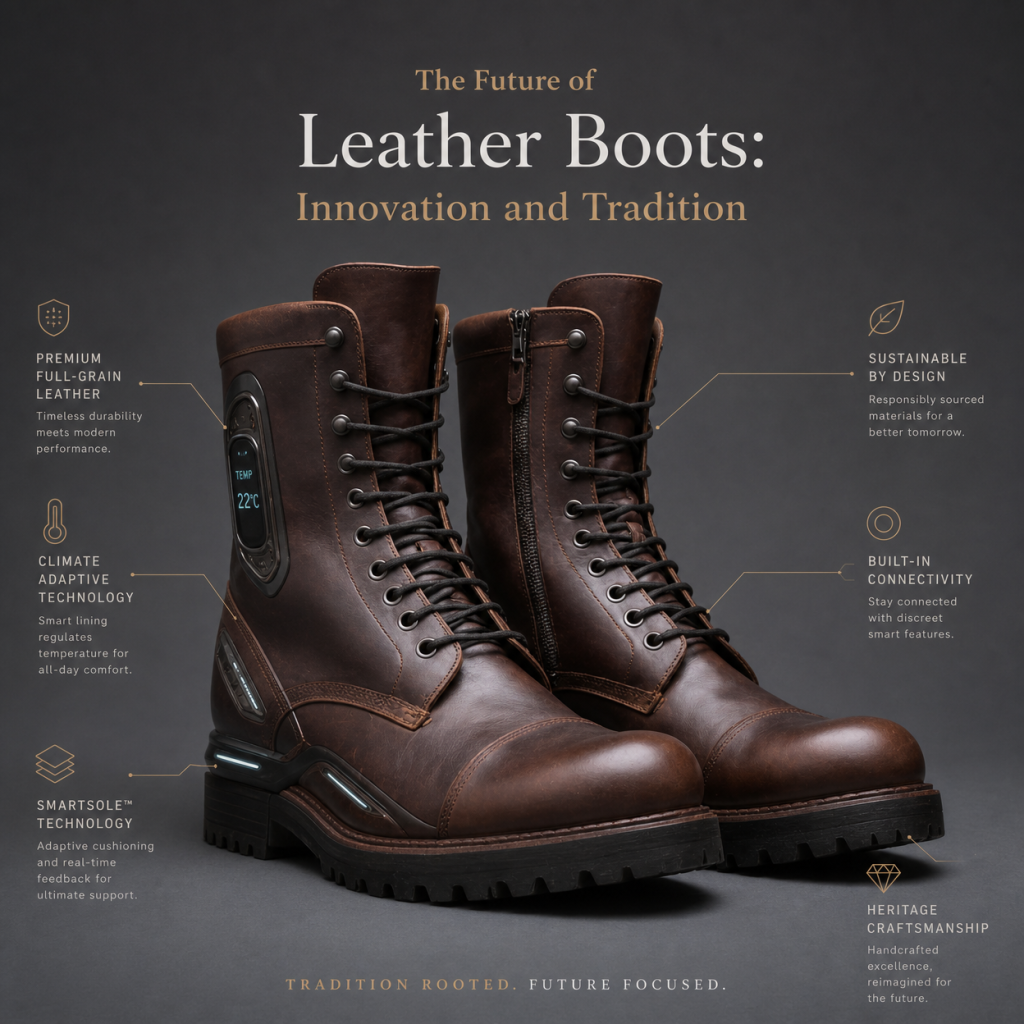
Smart Footwear Possibilities
Although still relatively niche, wearable technology may eventually influence leather boots as well.
Potential future innovations could include:
- Temperature regulation systems
- Embedded activity tracking
- Pressure monitoring
- Smart insoles
- Adaptive cushioning technologies
However, the challenge will be integrating technology without compromising the timeless aesthetic and craftsmanship that define leather boots.
Most consumers interested in heritage footwear still prioritize authenticity over excessive digital complexity.
Repairability and Circular Fashion
Future sustainability trends strongly favor repairable products.
Leather boots already possess a major advantage in this area because premium construction methods allow:
- Resoling
- Heel replacement
- Leather restoration
- Long-term maintenance
As environmental awareness grows, repair culture may become even more valuable.
Consumers increasingly appreciate products designed for decades of use rather than disposable consumption.
Brands emphasizing durability, repairability, and restoration services are likely to gain stronger long-term loyalty.
Heritage Brands and Storytelling
In an increasingly digital world, authenticity becomes even more valuable.
Heritage boot brands possess strong emotional appeal because they connect consumers with:
- History
- Craftsmanship
- Tradition
- Cultural identity
Storytelling will continue playing a major role in the future of leather boots.
Consumers are not simply buying footwear—they are buying narratives about craftsmanship, adventure, individuality, and timeless style.
Brands that successfully combine heritage with thoughtful innovation will likely thrive in the evolving market.
The Role of Younger Consumers
Younger generations are reshaping the industry through changing expectations.
Modern consumers often prioritize:
- Sustainability
- Ethical production
- Transparency
- Individuality
- Versatility
At the same time, many younger buyers are rediscovering appreciation for durable goods and classic craftsmanship as alternatives to disposable fast fashion.
This creates opportunities for bootmakers willing to modernize responsibly without abandoning traditional values.
Conclusion
The future of leather boots lies in the balance between innovation and tradition. Technological advancements are improving comfort, sustainability, customization, and manufacturing precision, while timeless craftsmanship and heritage design continue to define the emotional appeal of quality boots.
Modern consumers expect more from their footwear than ever before. They want products that are durable, ethically produced, environmentally responsible, comfortable, and reflective of personal identity. The leather boot industry is responding through advanced materials, digital manufacturing, direct-to-consumer models, and increasingly personalized production approaches.
Yet despite all these innovations, the essence of leather boots remains remarkably unchanged. People continue valuing authenticity, craftsmanship, durability, and the unique relationship that develops between well-made boots and their wearer over time.
The most successful future for leather boots will not reject tradition in favor of technology, nor ignore innovation in pursuit of nostalgia. Instead, it will combine the strengths of both worlds—preserving the artistry of classic bootmaking while embracing thoughtful advancements that improve comfort, sustainability, and accessibility for future generations.
