
May
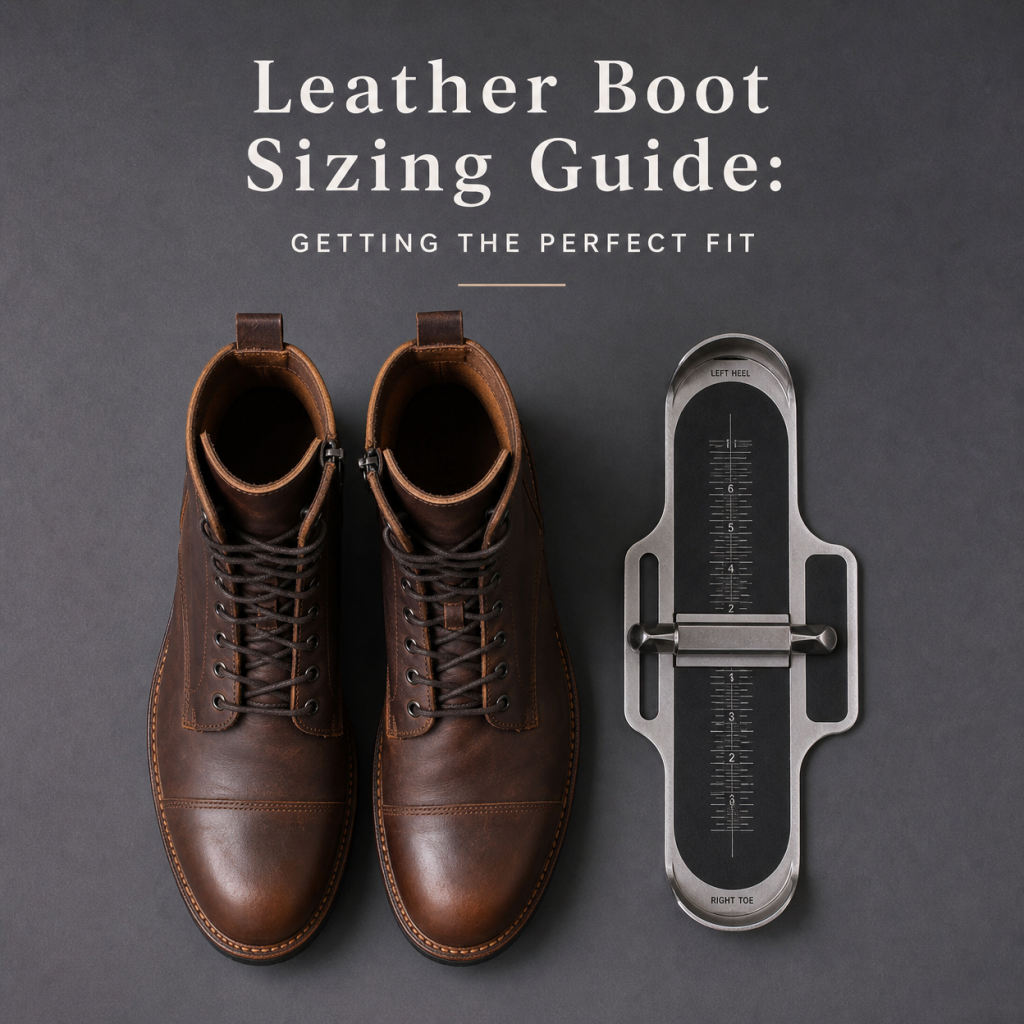
Leather Boot Sizing Guide: Getting the Perfect Fit
Getting the right size in leather boots is one of the most important decisions you can make when buying footwear. Even the highest-quality Leather Boots—full-grain leather, Goodyear welt construction, premium craftsmanship—will feel uncomfortable and perform poorly if the sizing is wrong. On the other hand, a perfectly fitted boot can feel better over time, shape to your feet, and last for years or even decades.
Leather Boots sizing is more complex than sneaker sizing because boots are built with structure, thicker materials, and long-term wear in mind. That means fit is not just about comfort on day one—it’s about how your foot and the boot will work together over time.
1. Why Boot Sizing Is Different from Regular Shoes
One of the biggest mistakes people make is assuming they can use their sneaker size for Leather Boots. In reality, boot sizing is influenced by several factors that make it different:
- Thicker leather materials
- Structured heel and ankle support
- Less internal stretch compared to sneakers
- Different manufacturing “lasts”
- Designed break-in period
Because of this, it is very common for someone to wear a different size in boots than in sports shoes. Some people go half a size down, others stay the same, and some even go up depending on the brand and design.
Boots are not meant to feel “loose and flexible” like sneakers—they are designed to feel secure and structured.
2. Understanding the Role of the “Last”
A key concept in boot sizing is the last, which is the 3D mold used to shape the boot during manufacturing.
The last determines:
- Toe box shape
- Arch positioning
- Heel structure
- Overall volume of the boot
- Fit profile (narrow, wide, high instep, etc.)
Different brands use different lasts, even for the same size label. That means:
- A size 42 in one brand may feel tight
- The same size in another brand may feel loose
- Toe shape can change how much space you feel
This is why trying boots on—or carefully checking brand sizing charts—is essential.
3. Measuring Your Feet Correctly
Accurate measurement is the foundation of correct boot sizing.
Best Time to Measure
Feet naturally change size throughout the day due to:
- Walking and movement
- Heat and blood circulation
- Natural swelling
For the most accurate result, measure your feet:
- In the afternoon or evening
- After a full day of activity
This ensures your measurement reflects real wearing conditions, not an idealized morning size.
How to Measure at Home
You don’t need special tools to measure your feet accurately.
What you need:
- A sheet of paper
- A pen or pencil
- A ruler or measuring tape
Steps:
- Place your foot on the paper while standing
- Trace the outline of your foot
- Measure heel to longest toe (length)
- Measure the widest part of your foot (width)
- Repeat for both feet
Always use the larger foot as your reference. Most people have one foot slightly bigger than the other.
4. Length Fit: Finding the Right Balance
Length is important, but it should not be too tight or too loose.
Ideal Toe Space
A proper boot fit should leave:
- About 0.5 inch (1–1.5 cm) of space in front of the longest toe
This space is important because:
- Feet naturally expand during walking
- Leather does not significantly stretch in length
- Prevents toe impact when going downhill (important for hiking boots)
- Allows natural movement without pressure
Too little space causes discomfort. Too much space causes instability.
5. Width: The Most Overlooked Factor
Width is just as important as length, but often ignored.
What Happens with the Wrong Width
If boots are too narrow:
- Pressure points develop
- Toes feel compressed
- Blisters or numbness can occur
- Long-term discomfort increases
If boots are too wide:
- Heel slipping
- Lack of stability
- Foot sliding inside the boot
- Uneven wear on the sole
Width Options
Many premium boot brands offer multiple widths:
- Narrow
- Standard
- Wide
- Extra-wide
Choosing the correct width often improves comfort more than changing length.
6. Heel Fit: Stability Is Everything
Heel fit is one of the clearest indicators of correct sizing.
What You Want
- Heel sits firmly in place
- Minimal movement when walking
- Slight slip is acceptable during break-in
- No rubbing or lifting
What Is a Problem
- Excessive heel slip
- Blisters forming at the back of the foot
- Loose structure around ankle area
A stable heel ensures the boot moves with your foot instead of against it.
7. Toe Box Comfort and Shape
Different boots have different toe box shapes depending on the last.
Common Toe Shapes
- Rounded toe → more comfort, casual use
- Almond toe → balanced style and fit
- Pointed toe → fashion-focused, less room
A proper toe box should allow:
- Toe movement without compression
- No upward pressure when walking
- Comfort during long wear
Tight toe boxes are one of the most common causes of boot discomfort.
8. Socks and Their Impact on Fit
Socks significantly change how boots feel.
Thick Socks
- Reduce internal space
- Increase warmth and cushioning
- Common for hiking and winter boots
Thin Socks
- Increase internal space
- Used for dress boots or warm climates
- Create closer fit feel
Always try boots using the same type of socks you plan to wear regularly. Fit can change noticeably between sock types.
9. Break-In Period vs Wrong Size
One of the most misunderstood aspects of boot fitting is the break-in period.
Normal Break-In Feel
- Mild tightness in certain areas
- Stiff leather at first
- Gradual softening over time
- Increased comfort after several wears
This is expected, especially with full-grain leather boots.
Signs of Wrong Fit
- Sharp pain in specific spots
- Constant numbness or tingling
- Severe heel movement
- Discomfort that does not improve
If pain remains after a short break-in period, the size is likely incorrect.
10. Online Sizing Challenges
Buying boots online is common, but requires more attention.
Important Steps
- Check official brand sizing charts
- Read user reviews about fit
- Compare with brands you already own
- Check return/exchange policies
- Measure feet carefully before ordering
Some brands run large, others small, and some vary by model. Research is critical.
11. How Leather Boots Change Over Time
Leather boots do not stay the same forever—they evolve.
What Happens During Break-In
- Leather softens
- Creases form at flex points
- Foot shape begins to influence structure
- Comfort improves gradually
What Does NOT Change
- Length remains mostly the same
- Severe sizing mistakes do not fix themselves
- Excessively tight boots will stay tight
This is why getting the right size initially is so important.
12. Common Sizing Mistakes
Many fitting problems come from simple but avoidable errors:
- Choosing size based only on sneakers
- Ignoring width measurements
- Buying boots too large “for comfort”
- Not considering sock thickness
- Skipping proper foot measurement
Avoiding these mistakes dramatically improves fit success.
13. Practical In-Store Fitting Tips
If you try boots in person, use this approach:
- Wear your normal boot socks
- Walk for several minutes, not just standing
- Check heel stability while moving
- Test pressure points carefully
- Try both feet properly
Standing still is not enough—movement reveals real fit behavior.
Conclusion
Leather boot sizing is not just a technical step—it is the foundation of everything that comes after. Comfort, durability, and even the way boots age depend on getting the fit right from the beginning.
A properly sized boot should feel secure, structured, and slightly snug at first, then gradually become more comfortable as the leather adapts to your feet. Both length and width matter equally, and ignoring either one can lead to long-term discomfort.
In the end, the perfect leather boot is not just about craftsmanship or materials—it is about how precisely it matches your foot. When sizing is done correctly, boots stop being just footwear and become a long-term companion built around your movement, lifestyle, and comfort.
