
May
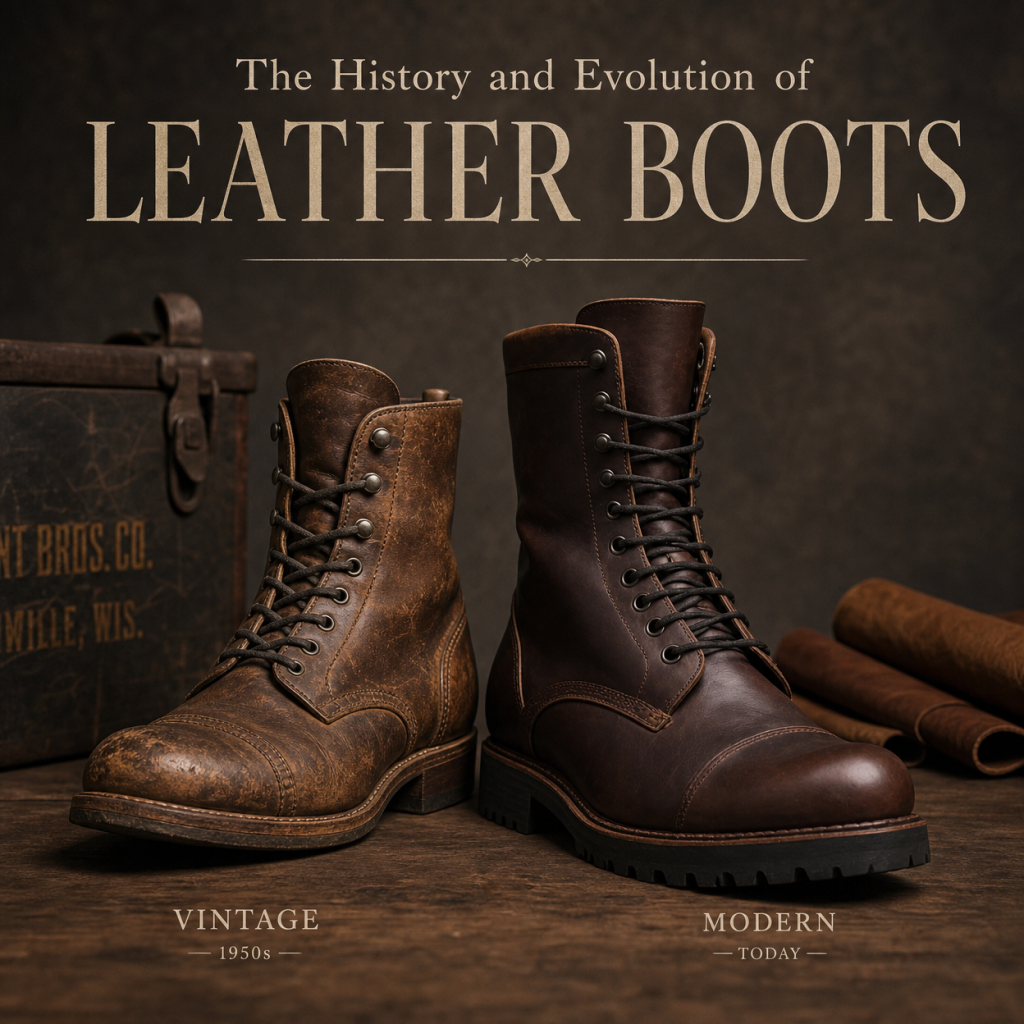
The History and Evolution of Leather Boots
Leather boots have one of the longest and most continuous histories in human footwear. Across thousands of years, they have shifted from purely functional protection in harsh environments to symbols of status, craftsmanship, fashion, and identity. Despite changes in materials, manufacturing, and style trends, the core purpose of leather boots has remained remarkably consistent: protecting the feet while enabling people to move more safely and comfortably through their environment.
Understanding the evolution of leather boots provides a deeper appreciation for why they remain so relevant today. Modern designs are not isolated innovations—they are the result of centuries of gradual improvement shaped by survival needs, social hierarchy, military requirements, and evolving fashion culture.
Early Origins: Survival and Necessity
The earliest forms of leather footwear date back thousands of years, likely emerging during the Bronze Age or even earlier. In prehistoric societies, footwear was not a fashion choice but a survival tool.
Early boots were extremely simple in construction. They were typically made from:
- Animal hides
- Raw leather strips
- Natural fibers such as sinew or plant cords
These materials were wrapped around the foot and lower leg to provide protection from:
- Cold weather
- Rough terrain
- Sharp rocks and debris
- Harsh environmental conditions
Unlike modern boots, early designs had no defined structure, sole engineering, or aesthetic purpose. They were practical solutions to environmental challenges.
Despite their simplicity, these early forms established a foundational idea that still defines boots today: covering and protecting the ankle improves durability, safety, and warmth.
Ancient Civilizations and Early Development
As civilizations developed, so did footwear design. Ancient cultures began refining leather working techniques, leading to more structured and durable boots.
Improvements in Craftsmanship
Advancements included:
- Better leather tanning processes
- Improved cutting techniques
- Early stitching methods
- More structured shaping around the foot
These improvements allowed footwear to become more durable and better fitted to the human foot.
Functional Expansion
In ancient societies, boots were used for:
- Hunting
- Military activity
- Travel across rough terrain
- Agricultural work
Footwear became increasingly specialized depending on the user’s role in society.
The Middle Ages: Boots as Status and Protection
During the Middle Ages, leather boots became significantly more structured and began to carry social meaning beyond practical use.
Social Status Symbol
In medieval Europe, boots were often associated with:
- Nobility
- Wealth
- Military rank
- Horseback riding elites
High-quality leather boots were expensive and required skilled craftsmanship, making them accessible primarily to upper social classes.
Decorative elements became more common, including:
- Embossed leather patterns
- Decorative stitching
- Extended shaft designs
- Refined shaping techniques
Boots were no longer just functional—they were visual indicators of status.
Military Importance
At the same time, boots became essential in military contexts.
Soldiers required footwear that could withstand:
- Long marches
- Rough terrain
- Combat conditions
- Weather exposure
Military boots were designed for durability and protection, laying the foundation for modern combat and work boots.
The combination of military practicality and aristocratic fashion began shaping two major directions in boot evolution: functional durability and stylistic refinement.
The Rise of Riding Boots (17th–18th Century)
One of the most influential developments in boot history was the emergence of riding boots during the 17th and 18th centuries.
Designed for Equestrian Use
Riding boots were created specifically for horseback riding, where stability, leg protection, and grip were essential.
Key features included:
- Tall shafts extending over the calf
- Stiff leather construction
- Reinforced structure for leg stability
- Smooth inner surfaces for comfort while riding
These boots protected riders from friction, weather, and saddle contact.
Fashion and Aristocracy
Beyond functionality, riding boots quickly became associated with aristocratic fashion. They were worn by:
- Nobility
- Military officers
- Wealthy landowners
Their tall, elegant silhouette became a symbol of refinement and authority.
Even today, modern dress boots and equestrian-inspired designs trace their roots directly back to this era.
Industrial Revolution: Mass Production and Accessibility
The Industrial Revolution marked a major turning point in the evolution of leather boots.
Changes in Manufacturing
Before industrialization, boots were handmade by cobblers. Each pair was individually crafted, making them expensive and time-consuming to produce.
With industrial advancement came:
- Mechanized cutting tools
- Standardized sizing systems
- Mass production techniques
- Improved tanning processes
These innovations made boots more accessible to the general population.
Expansion of Use
As boots became more widely available, they were adopted by:
- Factory workers
- Farmers
- Urban populations
- Industrial laborers
Boots shifted from elite or military-only footwear to everyday practical wear.
This era also saw the beginning of specialized work boots designed for specific industrial tasks.
19th and Early 20th Century: Functional Specialization
As societies became more industrialized, boots began to diversify into specialized categories.
Work Boots
Work boots were designed for heavy-duty environments such as:
- Construction
- Mining
- Manufacturing
- Agriculture
These boots emphasized:
- Thick leather construction
- Reinforced soles
- Protective toe designs
- Durable stitching
They became essential safety equipment for labor-intensive industries.
Military Evolution
Military boots also evolved significantly during this period. They became:
- More standardized
- More durable
- Designed for long-distance marching
- Adapted to different climates and terrains
The concept of uniform military footwear helped establish modern boot sizing and production standards.
20th Century: Fashion Meets Function
The 20th century brought a major shift in leather boots, as fashion began playing a larger role alongside functionality.
Post-War Influence
After major global conflicts, military boot designs influenced civilian fashion. Combat-style boots became popular in everyday wear due to their durability and rugged appearance.
Fashion Diversification
Boots began appearing in:
- High fashion
- Streetwear culture
- Music and subcultures
- Professional wardrobes
New styles emerged, including:
- Chelsea boots
- Chukka boots
- Fashion-forward ankle boots
- Designer dress boots
Boots became a versatile fashion item rather than purely functional footwear.
Modern Era: Innovation and Global Design
Today’s leather boots combine centuries of tradition with advanced technology and global manufacturing systems.
Material Innovation
Modern boots benefit from:
- Advanced leather treatments
- Waterproof membranes
- Lightweight synthetic components
- Improved sole materials
These innovations enhance comfort and performance while preserving traditional aesthetics.
Global Manufacturing
Boot production is now global, with craftsmanship and industrial processes spread across multiple regions. This has increased availability while also raising competition in quality and pricing.
Fashion and Identity
In modern culture, boots are no longer just functional or status-based—they are expressions of identity.
People choose boots based on:
- Personal style
- Lifestyle needs
- Cultural influence
- Brand identity
- Practical requirements
The Enduring Legacy of Leather Boots
Despite thousands of years of change, leather boots have maintained a continuous presence in human society. Their endurance is rooted in a simple truth: they solve real problems while adapting to cultural evolution.
Modern boots still reflect their historical origins:
- Protection from environment (ancient necessity)
- Status and elegance (medieval influence)
- Durability and practicality (military and industrial development)
- Style and identity (modern fashion evolution)
Each era contributed something essential to the boots we wear today.
Conclusion
The history of leather boots is a story of adaptation, survival, craftsmanship, and cultural transformation. From primitive leather wrappings used for protection in ancient times to highly engineered modern footwear blending fashion and technology, boots have continuously evolved alongside human civilization.
What makes leather boots truly remarkable is their ability to remain relevant across completely different eras and societies. They have served warriors, workers, aristocrats, travelers, and modern consumers—all while maintaining their core purpose of protection and durability.
Today’s leather boots are not just products of fashion or industry—they are the result of thousands of years of refinement. Every stitch, sole, and design choice carries echoes of history, making leather boots one of the most enduring and meaningful forms of footwear ever created.
