
May
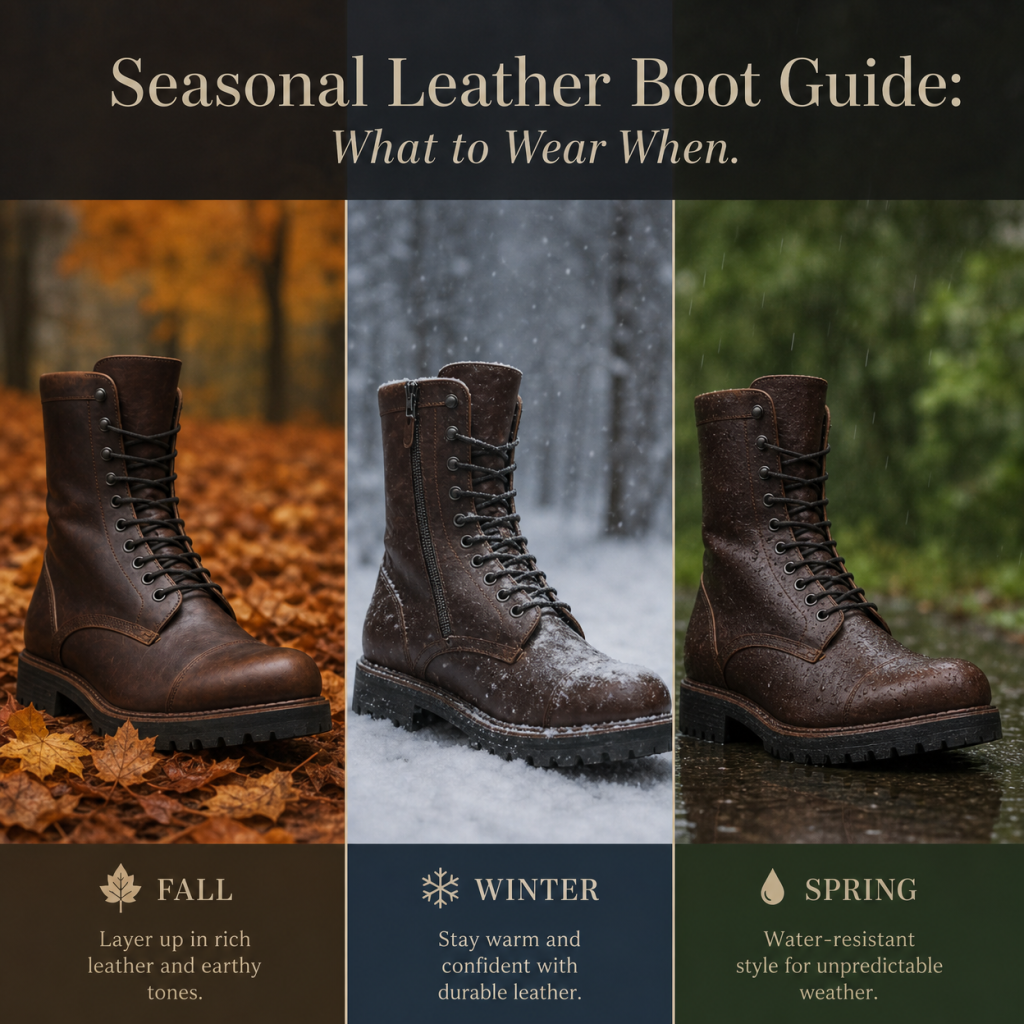
Seasonal Leather Boot Guide: What to Wear When
Leather boots aren’t limited to a single season—they’re year-round footwear when chosen and maintained correctly. The key is understanding how temperature, humidity, rainfall, and terrain change throughout the year and matching your boots to those conditions.
A well-planned seasonal rotation doesn’t just improve comfort—it also extends the lifespan of your boots. Leather reacts to heat, moisture, and cold, so using the right pair in the right season prevents unnecessary wear and damage.
Instead of forcing one pair to do everything, building a seasonal boot system gives you better performance, longer durability, and consistently better comfort all year round.
Winter: Maximum Protection and Insulation
Winter is the most demanding season for leather boots. Cold temperatures, snow, slush, and ice require boots built for protection and stability.
Key Features for Winter Boots
Winter-ready leather boots should include:
- Insulated lining (fleece or wool)
- Thick, durable leather
- Waterproof or water-resistant treatment
- High-traction rubber soles
- Higher shaft for snow protection
Insulation is essential because leather alone does not retain heat efficiently. Without proper lining, feet lose warmth quickly in cold environments.
Traction Matters Most
Ice and wet pavement create high slip risk. Winter soles should feature:
- Deep tread patterns
- Soft rubber compounds for grip
- Wide surface contact for stability
Good traction is not optional in winter—it directly affects safety.
Water Protection is Critical
Snow eventually melts into water, and slush easily penetrates untreated leather. Winter boots should always include:
- Waterproof membranes or coatings
- Sealed stitching where possible
- Regular reapplication of protective sprays
Wet leather in freezing conditions can stiffen and crack over time, reducing both comfort and lifespan.
Ideal Winter Styles
- Heavy-duty lace-up boots
- Insulated work boots
- Winter hiking boots
- Fur-lined or thermal boots
Winter is the season where function clearly outweighs aesthetics.
Spring: Transition and Unpredictable Weather
Spring is a transitional season, which makes it one of the most unpredictable times for footwear. Rain, humidity, and sudden temperature shifts are common.
What Spring Boots Need
Spring boots should balance:
- Moderate breathability
- Light water resistance
- Comfortable flexibility
- Easy adaptability to changing weather
Heavy winter insulation is no longer necessary, but full summer breathability is still premature.
Best Materials for Spring
Spring is ideal for:
- Smooth leather boots
- Lightweight full-grain leather
- Suede (in dry conditions)
- Nubuck leather
These materials offer comfort while adapting to fluctuating temperatures.
Water Resistance is Still Important
Spring rain is frequent, so boots should include:
- Light waterproof coating
- Protective sprays
- Quick-drying properties
However, boots don’t need the heavy insulation required in winter.
Best Spring Styles
- Chelsea boots
- Lightweight lace-up boots
- Chukka boots
- Low-profile ankle boots
Spring footwear tends to shift toward lighter tones and softer materials, reflecting seasonal change.
Summer: Lightweight and Breathable Comfort
Summer is the most challenging season for leather boots because heat and humidity can reduce comfort if footwear is too heavy or poorly ventilated.
What Summer Boots Need
Summer boots should prioritize:
- Breathability
- Lightweight construction
- Low shaft height
- Minimal insulation
- Flexible soles
The goal is to avoid overheating and moisture buildup inside the boot.
Best Boot Heights for Summer
Tall boots are generally not practical in hot weather. Instead, focus on:
- Ankle boots
- Chelsea boots
- Low-cut leather boots
Shorter designs allow better airflow and reduce heat retention.
Leather Types for Summer
Summer works best with:
- Lightweight full-grain leather
- Suede (in dry conditions)
- Nubuck leather
These materials are more breathable and adapt better to warm environments.
Color Choices Matter
Summer aesthetics often favor:
- Light brown
- Tan
- Beige
- Sand tones
- Light grey leather
Lighter colors absorb less heat and match seasonal styling trends.
Avoid Overheating Issues
Wearing heavy, insulated boots in summer can cause:
- Excess sweating
- Blisters
- Odor buildup
- Leather damage from moisture
Proper summer footwear avoids these issues by reducing material density and improving airflow.
Autumn: The Most Versatile Boot Season
Autumn is widely considered the best season for leather boots. Temperatures are mild, conditions are stable, and styling options are at their peak.
Why Autumn is Ideal for Boots
Autumn offers:
- Comfortable temperatures
- Lower humidity than summer
- Fewer extreme weather conditions
- Perfect styling conditions for leather footwear
This makes it the easiest season for wearing almost any type of leather boot.
Best Boot Types for Autumn
Autumn supports a wide range of styles:
- Classic lace-up boots
- Chelsea boots
- Chukka boots
- Dress boots
- Lightweight work-inspired boots
You can comfortably transition between casual, formal, and rugged styles.
Leather Aging Looks Best in Autumn
One underrated benefit is how leather develops character in autumn light and conditions. Moderate humidity helps leather:
- Develop patina
- Maintain softness
- Avoid extreme drying or moisture stress
This is the season where leather boots often look their best aesthetically.
Layering-Friendly Styling
Autumn fashion pairs naturally with boots:
- Jeans and jackets
- Knitwear and boots
- Casual layering outfits
- Smart casual office wear
Boots become a central part of seasonal style expression.
Rainy Season Considerations (Year-Round Factor)
In many regions, rainfall is not limited to a single season. Understanding wet-weather boot care is essential.
What Wet Conditions Require
Rain-friendly boots should include:
- Water-resistant leather treatment
- Rubber or hybrid soles
- Sealed stitching where possible
- Quick drying capability
Even premium leather is vulnerable without protection.
Post-Rain Care is Critical
After exposure to rain:
- Wipe boots dry immediately
- Air dry naturally (never heat dry)
- Recondition if needed
- Reapply waterproofing when necessary
Neglecting post-rain care is one of the fastest ways to shorten boot lifespan.
Matching Boot Types to Seasons
Different boot categories perform better in specific conditions:
Winter Boots
- Insulated
- Waterproof
- Heavy traction soles
Spring Boots
- Lightweight leather
- Water-resistant
- Flexible construction
Summer Boots
- Breathable
- Low-cut designs
- Minimal insulation
Autumn Boots
- All-purpose styles
- Balanced comfort and durability
- Versatile aesthetics
Building a Seasonal Boot Rotation
A smart boot collection isn’t about owning many pairs—it’s about owning the right pairs.
A practical rotation might include:
- One insulated winter boot
- One waterproof transitional boot
- One breathable summer boot
- One versatile everyday autumn boot
This system reduces wear on individual pairs and ensures each boot is used in optimal conditions.
Leather Care by Season
Each season affects leather differently.
Winter Care
- Focus on waterproofing
- Prevent salt damage
- Condition after exposure
Spring Care
- Remove mud and moisture quickly
- Maintain light conditioning
Summer Care
- Prevent drying and cracking
- Avoid excessive exposure to heat
Autumn Care
- Balanced conditioning routine
- Occasional waterproofing
Seasonal maintenance keeps leather flexible and long-lasting.
Common Seasonal Mistakes
Many boot problems come from incorrect seasonal use:
- Wearing heavy boots in summer
- Ignoring waterproofing in rainy seasons
- Using suede in wet conditions
- Over-conditioning in humid weather
- Skipping traction needs in winter
Avoiding these mistakes dramatically improves boot lifespan.
Conclusion
Leather boots are truly year-round footwear, but only when matched correctly to seasonal conditions. Winter demands insulation and protection, spring requires flexibility and water resistance, summer prioritizes breathability and light construction, and autumn offers the most versatile environment for all boot styles.
Understanding seasonal needs doesn’t just improve comfort—it directly extends the life of your boots and helps maintain their appearance and performance over time.
A well-planned seasonal rotation ensures that every pair of leather boots works in its ideal environment, delivering better comfort, better durability, and a more refined wearing experience throughout the entire year.
