
Post
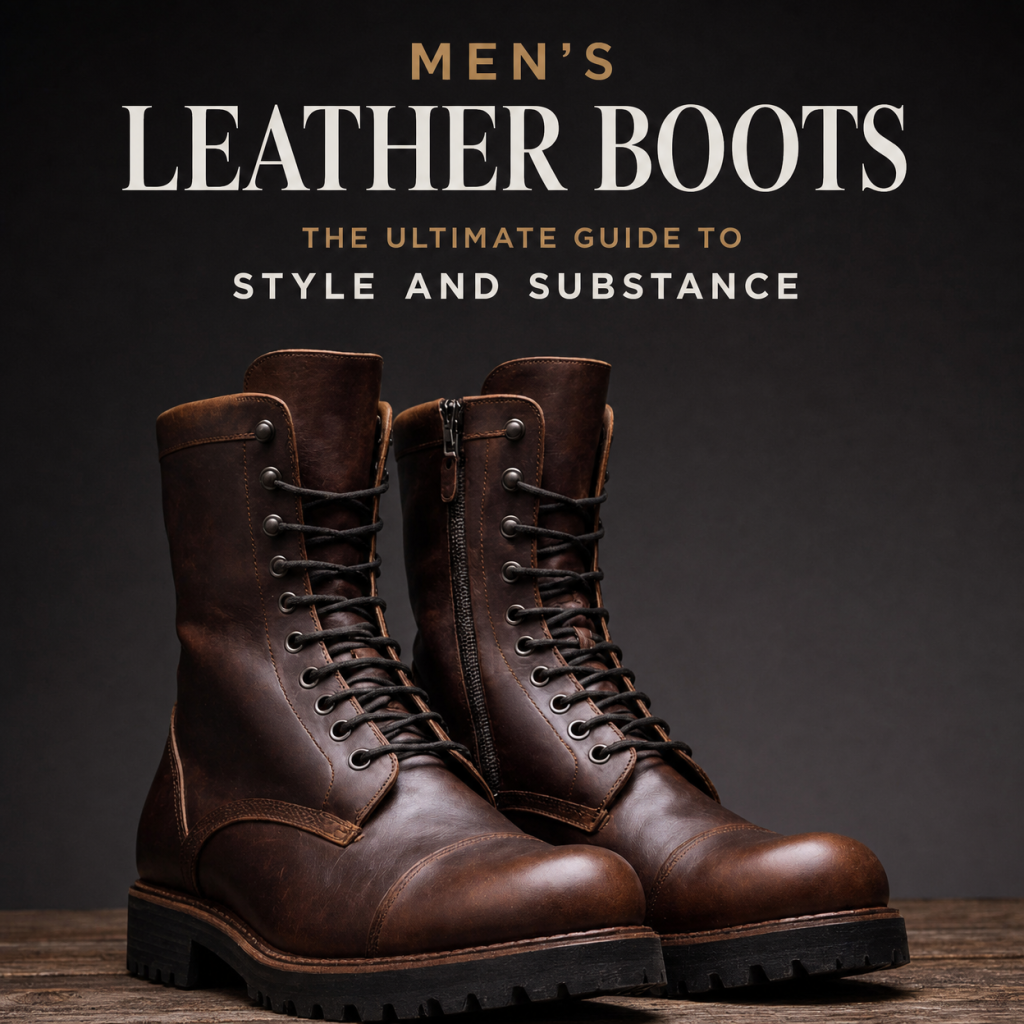
Men’s Leather Boots: The Ultimate Guide to Style and Substance
May
Men’s Leather Boots: The Ultimate Guide to Style and Substance
Men’s leather boots occupy a rare space in menswear where practicality and style overlap without compromise. They are equally at home in a professional office, a weekend outfit, or a demanding work environment. Unlike many fashion items that shift with trends, leather boots remain consistently relevant because they are built on function first, with style layered on top.
A well-chosen pair doesn’t just complete an outfit—it shapes your entire wardrobe. The key is understanding the major styles, how they function, and which ones actually fit your lifestyle.
1. Why Men’s Leather Boots Matter in Modern Style
Leather boots are one of the few footwear types that work across multiple dress codes. A single pair can often replace sneakers, dress shoes, and casual shoes depending on how it’s styled.
Core advantages:
- Strong visual structure improves overall outfit appearance
- Durable materials last significantly longer than most shoes
- Versatility across casual, smart-casual, and formal settings
- Better foot support compared to many lightweight shoes
Instead of owning many low-quality shoes, many men build fewer but better boot options that last longer and perform better.
2. Chelsea Boots: Minimalism and Maximum Versatility
The Chelsea boot is one of the most essential styles in men’s footwear.
Key characteristics:
- Elastic side panels instead of laces
- Clean, slim silhouette
- Easy slip-on design
- Typically ankle-height
- Works with both formal and casual outfits
Why Chelsea boots are so popular
Chelsea boots offer a rare combination of simplicity and elegance. There are no visible laces or hardware, which creates a clean profile that pairs well with almost anything.
Styling versatility:
- With jeans → casual modern look
- With chinos → smart casual balance
- With suits → refined formal alternative to dress shoes
A high-quality Chelsea boot in black or dark brown leather can function as a wardrobe foundation piece.
3. Lace-Up Leather Boots: Structure and Control
Lace-up boots provide more customization and structural support than slip-on styles.
Key characteristics:
- Adjustable fit through lacing system
- Strong ankle support
- Available in casual, work, and dress variations
- More secure fit during movement
Why lace-up boots matter
Unlike Chelsea boots, lace-up designs allow precise adjustment. This is especially useful during break-in periods or for people with wider or narrower feet.
Common variations:
- Casual leather boots (for daily wear)
- Dress boots (sleeker, more refined shape)
- Utility boots (rugged, durable construction)
Styling flexibility:
- Jeans → rugged casual style
- Chinos → smart everyday outfit
- Wool trousers → refined autumn/winter look
Lace-up boots are often chosen for stability, especially in colder or more active environments.
4. Work Boots: Durability Above Everything
Work boots are built for function first, style second—but modern designs often combine both effectively.
Key characteristics:
- Reinforced toe protection (steel or composite in some models)
- Thick, durable leather uppers
- Oil- and slip-resistant soles
- Heavy-duty stitching and construction
- Designed for long hours of physical use
Why they are valuable
Premium work boots are designed to survive harsh conditions such as:
- Construction sites
- Warehouses
- Outdoor labor environments
- Industrial workspaces
Real-world benefits:
- Long lifespan under daily wear
- Strong protection for feet
- High resistance to abrasion and impact
- Reliable grip on slippery surfaces
Even outside of work environments, work boots have become popular in fashion due to their rugged aesthetic.
5. Dress Boots: Formal Style with Leather Durability
Dress boots bridge the gap between traditional dress shoes and rugged boots.
Key characteristics:
- Sleek, minimal design
- Slim toe profile
- Polished leather finish
- Lightweight construction compared to work boots
When to wear dress boots:
- Business meetings
- Formal events
- Smart-casual office environments
- Evening social occasions
Dress boots offer more ankle coverage than shoes, making them practical in colder seasons while maintaining a professional appearance.
6. Brogue Boots: Detail and Personality
Brogue boots are defined by decorative perforations along the leather.
Key characteristics:
- Decorative punching patterns (broguing)
- Often lace-up style
- Can range from casual to semi-formal
- Strong visual detail compared to plain boots
Style identity:
Brogue boots are more expressive than minimal designs. They add personality without becoming overly casual.
Best use cases:
- Smart-casual outfits
- Business-casual environments
- Style-focused wardrobes
They are ideal for individuals who want something more visually interesting than plain leather boots.
7. Chukka Boots: Lightweight and Relaxed Elegance
Chukka boots are ankle-high boots with simple lace systems, typically featuring two or three eyelets.
Key characteristics:
- Lightweight construction
- Minimal lace design
- Soft leather or suede options
- Casual, relaxed feel
Why they are popular
Chukka boots are extremely easy to wear and pair well with casual outfits without feeling too heavy or formal.
Styling options:
- Jeans → relaxed everyday outfit
- Chinos → clean casual style
- Lightweight jackets → modern minimal look
They are especially popular in warmer climates due to their breathable structure.
8. How to Choose the Right Boot Style
Choosing men’s leather boots is not just about appearance—it’s about lifestyle alignment.
Ask yourself:
- Where will I wear them most?
- Do I need durability or style priority?
- How often will I wear them weekly?
- Do I prefer lace-up or slip-on convenience?
Simple guide:
- Daily office + versatility → Chelsea boots
- Active lifestyle → lace-up boots
- Physical work → work boots
- Formal occasions → dress boots
- Casual weekend wear → chukka boots
The best boot is the one that fits your routine, not just your wardrobe.
9. Leather Quality Still Matters Most
No matter the style, leather quality defines long-term performance.
High-quality options:
- Full-grain leather → best durability and aging
- Top-grain leather → smooth appearance, slightly processed
- Suede → softer look, less formal, more maintenance required
Full-grain leather remains the best option for long-term investment boots because it:
- Develops patina over time
- Resists wear better
- Maintains structure longer
10. Fit and Comfort Considerations
Even the best boots fail if the fit is wrong.
Ideal fit includes:
- Snug heel with minimal slipping
- Slight toe room (not tight or cramped)
- Secure midfoot support
- Comfort during walking, not just standing
Leather boots often require a break-in period, but discomfort should reduce—not worsen—over time.
11. Maintenance for Long-Term Wear
To extend boot life:
- Clean regularly to remove dirt
- Condition leather to prevent drying
- Use waterproofing for wet environments
- Store with proper shape support
Good maintenance can turn a 3-year boot into a 10–15-year investment.
Conclusion
Men’s leather boots are more than just footwear—they are foundational style tools that combine durability, function, and personal expression. From minimalist Chelsea boots to rugged work boots, each style serves a different role in modern life.
The key to choosing the right pair is not chasing trends, but understanding your needs:
- Lifestyle
- Frequency of use
- Style preference
- Environment
When these factors align, leather boots become one of the most reliable and long-lasting investments in a man’s wardrobe—delivering both confidence in appearance and consistency in performance over time.
