
Post
Leather Boot Care in Extreme Climates
May
Leather Boot Care in Extreme Climates
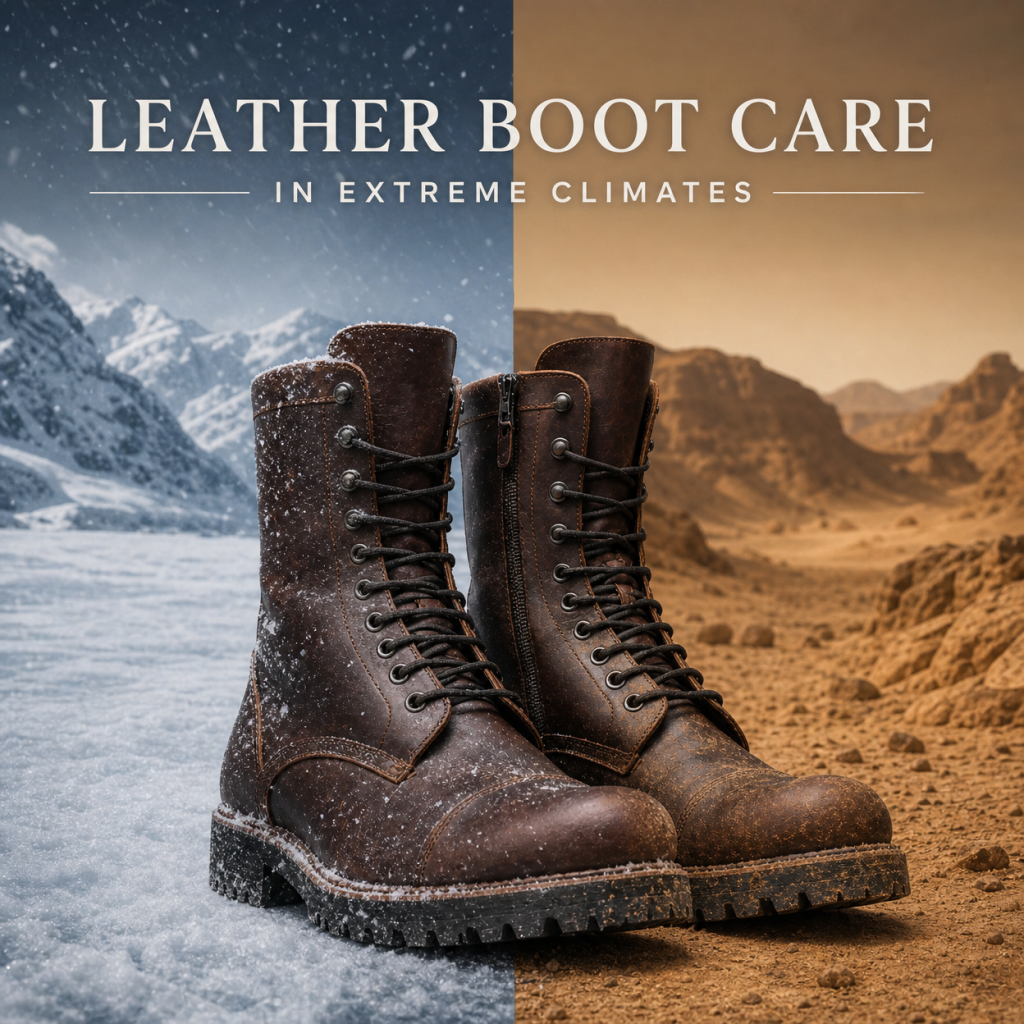
Leather boots are naturally durable, but extreme climates can push the material beyond its comfort zone. Whether dealing with scorching heat, freezing rain, or constant humidity, environmental stress directly affects leather structure, moisture balance, and long-term durability.
The key to protecting boots in harsh climates is not complicated care—it’s climate-adapted maintenance. Small adjustments in cleaning, conditioning, and storage routines can significantly extend boot lifespan and prevent early damage.
Why Climate Matters for Leather
Leather is a natural material that constantly interacts with its environment. Temperature and humidity changes affect:
- Moisture content inside the leather
- Flexibility and softness
- Risk of cracking or drying
- Mold and mildew formation
- Surface texture and color stability
In extreme climates, these effects are accelerated, meaning standard care routines are often not enough.
Hot and Dry Climates: Preventing Cracking and Dryness
Hot, arid environments are one of the most damaging conditions for leather. The main issue is rapid moisture loss, which leads to stiffness and cracking over time.
Main Risks in Dry Heat
- Leather drying out too quickly
- Loss of natural oils
- Surface cracking at flex points
- Fading or uneven coloration
- Reduced flexibility
Best Care Practices
To protect boots in hot, dry conditions:
- Condition every 2–3 months instead of standard intervals
- Use rich, moisturizing leather conditioners
- Apply conditioner more heavily on flex zones (toe and instep)
- Store boots away from direct sunlight
- Avoid leaving boots in hot vehicles or near heat sources
Extra Protection Tips
- Use light leather balms to lock in moisture
- Rotate boots more frequently to reduce constant heat exposure
- Keep boots in breathable storage with stable room temperature
The goal is to continuously replenish moisture before the leather becomes brittle.
Cold and Wet Climates: Fighting Water Damage and Freezing Stress
Cold climates introduce a different challenge: moisture combined with low temperatures. Water exposure followed by freezing conditions can be especially harmful to leather structure.
Main Risks in Cold Wet Conditions
- Water absorption and staining
- Freeze-thaw damage weakening fibers
- Salt damage from icy surfaces
- Mildew growth in damp storage
- Stiffness after repeated wet exposure
Best Care Practices
- Apply waterproofing treatment every 2–3 months
- Reapply protective coatings after heavy rain or snow exposure
- Clean boots immediately after exposure to slush or salt
- Dry naturally at room temperature (never use direct heat)
Handling Wet Boots
If boots get soaked:
- Wipe off excess moisture immediately
- Stuff with paper or boot trees to maintain shape
- Allow slow air drying
- Recondition once fully dry if leather feels stiff
Additional Protection
- Use rubber overshoes in extreme snow conditions when possible
- Apply wax-based protectants for stronger water resistance
- Store boots in dry, ventilated areas away from cold damp floors
Cold climates demand consistent moisture management to prevent long-term structural damage.
Humid Climates: Controlling Mold and Excess Moisture
High humidity creates a different problem: too much moisture in the air, which encourages mold, mildew, and unpleasant odors.
Main Risks in Humid Environments
- Mold and mildew growth
- Softening or weakening of leather fibers
- Odor buildup inside boots
- Sticky or damp leather texture
- Accelerated degradation in storage
Best Care Practices
- Store boots in well-ventilated areas
- Use cedar shoe trees or moisture absorbers
- Avoid sealed plastic containers
- Air out boots after each use
- Rotate footwear frequently
Storage Strategy
Proper storage is critical in humid climates:
- Use breathable cotton or fabric dust bags
- Keep boots elevated off damp floors
- Store in rooms with airflow or dehumidification
- Avoid closets with poor ventilation
Preventive Treatments
- Light anti-fungal sprays (when needed)
- Regular inspection for early mold signs
- Occasional sun exposure (short and indirect) to kill surface bacteria
The key is preventing moisture accumulation rather than reacting to mold after it appears.
Mixed and Seasonal Climate Challenges
Many regions experience multiple climate types throughout the year. This requires a flexible maintenance approach.
Seasonal Adjustments
- Summer → focus on conditioning and UV protection
- Rainy season → prioritize waterproofing
- Winter → emphasize drying and salt protection
Adaptive Routine
Instead of fixed schedules:
- Adjust conditioning based on dryness level
- Increase waterproofing during wet months
- Monitor boots visually for early signs of stress
Flexibility is more important than strict timing.
Storage in Extreme Climates
Storage is often the deciding factor in whether boots survive harsh conditions long-term.
Universal Storage Rules
- Keep boots in cool, stable temperatures
- Avoid direct sunlight exposure
- Maintain airflow around stored boots
- Use shape support (boot trees or stuffing)
Climate-Specific Storage Tips
- Dry climates → prevent over-drying with occasional conditioning
- Humid climates → use moisture absorbers and ventilation
- Cold climates → avoid freezing storage environments
Improper storage often causes more damage than regular wear.
Conditioning Strategy by Climate
Conditioning frequency should always match environmental stress.
General Guidelines
- Dry climates: every 2–3 months
- Humid climates: every 4–6 months (light conditioning)
- Cold wet climates: after heavy exposure or every 3–4 months
Choosing the Right Conditioner
- Dry climates → heavier moisturizing creams
- Wet climates → water-resistant conditioning wax
- Humid climates → lightweight conditioners to avoid over-softening
Balance is key—too much conditioning can be just as harmful as too little.
Common Mistakes in Extreme Climates
Many boot problems come from incorrect assumptions about leather behavior.
Mistakes to Avoid
- Leaving boots wet for long periods
- Using direct heat to dry leather
- Over-conditioning in humid environments
- Storing boots in sealed plastic bags
- Ignoring early signs of mold or cracking
- Wearing the same pair daily without rest
These mistakes accelerate wear regardless of boot quality.
Pro Tips for Long-Term Protection
For serious boot longevity in extreme climates:
- Rotate multiple pairs of boots
- Inspect leather monthly for early damage
- Keep a simple maintenance kit (brush, conditioner, waterproof spray)
- Treat boots as seasonal equipment, not disposable items
- Address small issues immediately before they grow
Consistency matters more than intensity.
Conclusion
Leather boots can perform exceptionally well in extreme climates, but only when care routines are adapted to environmental conditions. Hot, dry climates demand moisture restoration, cold wet climates require strong waterproofing and drying control, and humid climates need ventilation and mold prevention.
The fundamental principle is simple: match your maintenance strategy to your environment.
With proper climate-aware care, leather boots remain durable, comfortable, and visually appealing regardless of weather conditions. Instead of breaking down under stress, well-maintained boots continue to age gracefully—developing character while staying functional for years of use.
