
Post
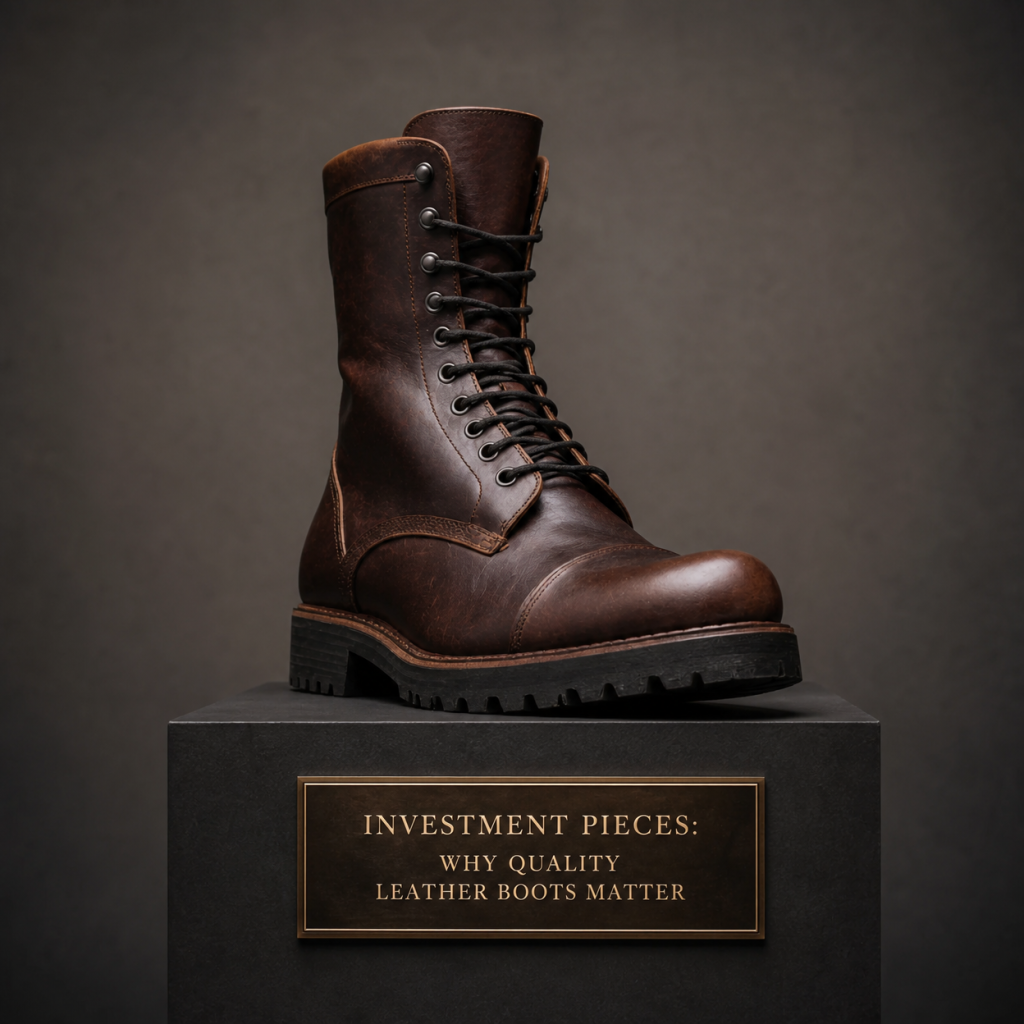
Investment Pieces: Why Quality Leather Boots Matter
May
Investment Pieces: Why Quality Leather Boots Matter
In an era dominated by fast fashion and disposable products, quality leather boots remain one of the few purchases that genuinely become more valuable over time. They are not simply accessories or seasonal fashion items—they are long-term tools designed to improve with use, age gracefully, and provide reliable performance for years or even decades.
Many people initially hesitate at the price of premium leather boots. Spending two hundred, three hundred, or even more dollars on footwear can seem excessive compared to cheaper alternatives. However, when evaluated through durability, comfort, repairability, and long-term value, premium boots often become one of the smartest purchases a person can make.
The key difference lies in mindset: quality leather boots are not short-term expenses—they are investments.
1. Understanding the Investment Mindset
Most inexpensive footwear is designed around replacement cycles. Manufacturers expect consumers to buy new pairs every year because the materials, construction, and durability are intentionally limited.
Premium leather boots follow a completely different philosophy:
- Long-term wearability
- Repairability instead of disposal
- Timeless design instead of trend dependency
- Aging as improvement rather than deterioration
This changes how value should be measured.
Instead of asking:
“How much do these boots cost today?”
A better question becomes:
“How much value will these boots provide over ten years?”
2. Cost-Per-Wear: The Real Economics of Quality Boots
One of the strongest arguments for premium leather boots is cost-per-wear analysis.
Example Comparison
Cheap Boots
- Price: $50
- Lifespan: 1 year
- Worn 4 times per week
- Approximate wears per year: 200
Cost per wear:
- $50 ÷ 200 = $0.25 per wear
Now compare that to premium boots.
Premium Boots
- Price: $300
- Lifespan: 10 years
- Same wearing frequency
- Approximate wears: 2,000
Cost per wear:
- $300 ÷ 2,000 = $0.15 per wear
And this calculation becomes even more favorable when premium boots are resoled and worn beyond ten years.
The Important Reality
Cheap boots appear affordable at checkout, but expensive over time.
Premium boots appear expensive initially, but economical over years of use.
3. Durability Changes Everything
Durability is the foundation of investment footwear.
Why Premium Boots Last Longer
High-quality boots use:
- Full-grain or top-grain leather
- Reinforced stitching
- Dense outsole materials
- Strong internal structure
- Repairable construction methods
Cheaper boots often rely on:
- Thin synthetic materials
- Glue-heavy construction
- Disposable soles
- Weak stitching
The difference becomes obvious after months of regular wear.
4. Goodyear Welt Construction: The Investment Standard
One reason premium boots last so long is construction method.
What is Goodyear Welting?
This construction method stitches:
- The upper leather
- A leather welt
- The outsole
into a durable layered structure.
Why it matters
Goodyear welted boots:
- Can be resoled repeatedly
- Resist water better
- Maintain structural integrity longer
- Handle heavy use more effectively
This transforms boots from disposable footwear into repairable long-term assets.
5. Resoling: Extending Life Indefinitely
The outsole naturally wears down first because it constantly contacts the ground.
With cheap boots:
- Sole damage usually means complete replacement of the entire boot
With premium boots:
- The worn sole is removed
- A new sole is attached
- The upper leather continues being used
This dramatically extends lifespan.
Real-world impact
A good pair of boots can survive:
- Multiple resoles
- Decades of use
- Changing fashion cycles
- Multiple environments and conditions
This repairability is one of the biggest differences between investment footwear and disposable footwear.
6. Leather Aging: Improvement Instead of Decline
Most inexpensive materials deteriorate visibly over time.
Synthetic footwear:
- Cracks
- Peels
- Fades
- Weakens structurally
Quality leather behaves differently.
Patina Development
Premium leather develops:
- Richer color tones
- Natural texture variation
- Unique creasing patterns
- A lived-in appearance known as patina
Instead of looking “old,” well-maintained leather often looks more interesting and attractive with age.
This is one reason leather boots feel personal over time—they begin reflecting your usage patterns and lifestyle.
7. Comfort as Long-Term Value
Comfort is not just a luxury—it directly affects how much value you get from footwear.
Why comfort matters economically
Boots that hurt:
- Stay in closets
- Get worn infrequently
- Provide little actual value
Boots that feel good:
- Become daily essentials
- Get consistent use
- Justify their cost through utility
Why premium boots often become more comfortable
High-quality leather:
- Molds to your feet over time
- Softens in pressure zones
- Adapts to your walking patterns
This creates personalized comfort impossible in rigid synthetic footwear.
8. Timeless Design Reduces Obsolescence
Trendy footwear loses relevance quickly.
Fashion cycles move rapidly:
- Colors change
- Silhouettes shift
- Trends disappear within seasons
Classic leather boots remain relevant because their designs are based on utility and tradition rather than trend-driven experimentation.
Examples of timeless styles:
- Chelsea boots
- Work boots
- Chukka boots
- Dress boots
These styles have remained wearable for decades because they are fundamentally functional and visually balanced.
9. Sustainability and Responsible Consumption
Investment footwear also supports sustainability.
Why premium boots are environmentally better
Long-lasting boots reduce:
- Waste generation
- Manufacturing demand
- Frequent shipping and packaging
- Material consumption
A single pair worn for 10–15 years has significantly lower environmental impact than multiple cheaply made replacements.
Repairability matters
Resoling and repairing extend usefulness instead of encouraging disposal.
This supports:
- Circular consumption habits
- Reduced landfill waste
- More responsible buying behavior
10. Emotional and Personal Value
Quality boots often become emotionally significant.
Because they:
- Age with you
- Travel through life experiences
- Carry visible wear history
- Reflect your personal movement and routines
They develop character beyond their functional purpose.
Many long-term boot owners remember:
- Trips taken in specific boots
- Jobs worked in them
- Milestones associated with them
This emotional durability is something disposable products rarely achieve.
11. Quality Boots as Wardrobe Foundations
Premium leather boots simplify dressing because they work consistently across many situations.
A good pair can handle:
- Casual outfits
- Smart casual styling
- Office environments
- Travel
- Outdoor use
This versatility increases practical value.
Instead of needing multiple mediocre shoes, one excellent pair often covers several roles.
12. Common Mistakes When Investing in Boots
Buying trend-driven styles
Classic silhouettes age better.
Ignoring construction quality
Leather quality alone is not enough—construction matters equally.
Choosing appearance over fit
Even premium boots fail if uncomfortable.
Neglecting maintenance
Investment footwear still requires care.
13. The Long-Term Financial Perspective
Over ten years, quality boots often provide:
- Lower total replacement costs
- Better comfort
- Better appearance
- More consistent performance
They represent a shift from:
repetitive spending
to:
long-term ownership
That difference changes the economics completely.
Conclusion
Quality leather boots matter because they challenge modern disposable consumption. They are designed not for short-term excitement, but for long-term usefulness, comfort, and durability.
Their value comes from multiple factors working together:
- Lower cost-per-wear
- Repairability and resoling
- Leather aging beautifully over time
- Timeless style
- Long-term comfort and utility
What initially seems like an expensive purchase often becomes one of the most economical and satisfying investments in a wardrobe.
A premium pair of leather boots is not just footwear—it is a durable companion designed to evolve with you, improve through wear, and remain relevant long after cheaper alternatives have been discarded.
