
Post
Leather Boots for Specific Activities: Hiking, Work, Everyday Wear
May
Leather Boots for Specific Activities: Hiking, Work, Everyday Wear
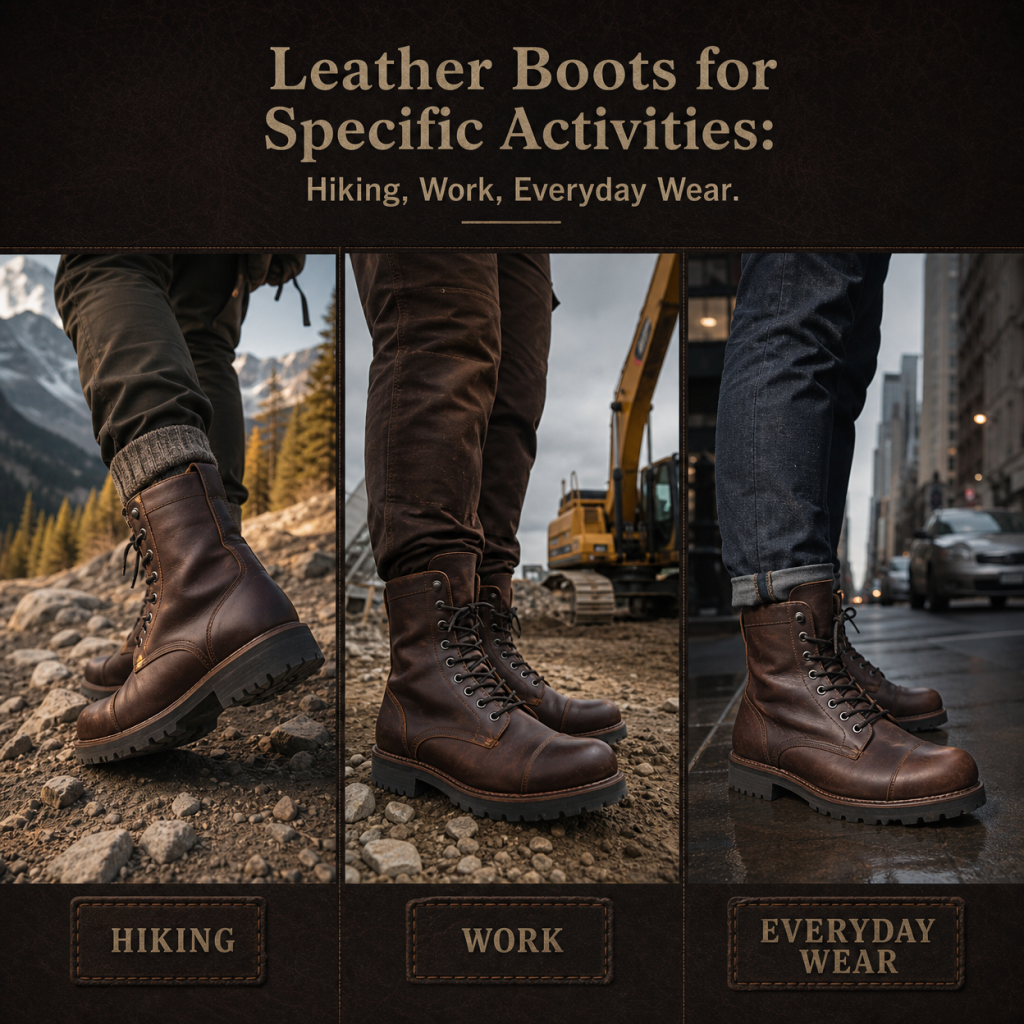
Leather boots are among the most versatile types of footwear ever created. They can provide rugged protection in harsh environments, reliable support during demanding physical work, and stylish comfort for everyday life. However, not all leather boots are designed for the same purpose. A boot that performs exceptionally well on mountain trails may feel uncomfortable in an office setting, while a stylish casual boot may fail completely in industrial work environments.
Choosing the right leather boots for specific activities is essential for comfort, safety, durability, and overall performance. Different activities place different demands on footwear, requiring specialized construction, materials, support systems, and traction designs. Understanding these differences helps consumers select boots suited to their actual needs instead of relying purely on appearance or brand reputation.
Investing in activity-specific leather boots is not simply about fashion or preference—it is about protecting your feet, improving comfort, and ensuring the boots function properly in real-world conditions. Whether you need hiking boots for outdoor adventures, work boots for demanding job sites, or versatile casual boots for daily wear, understanding the key features of each category allows you to make smarter and more satisfying decisions.
Why Activity-Specific Boots Matter
Many people try to use a single pair of boots for every situation. While some versatile designs exist, specialized boots typically perform far better within their intended environments.
Different activities create unique challenges for footwear, including:
- Uneven terrain
- Heavy impact
- Moisture exposure
- Long standing periods
- Slippery surfaces
- Extreme temperatures
- Occupational hazards
Boots designed specifically for these conditions include features that improve safety, reduce fatigue, and increase durability.
Wearing inappropriate boots can lead to:
- Foot pain
- Blisters
- Fatigue
- Reduced stability
- Increased injury risk
- Premature boot damage
Choosing the correct boots demonstrates practical understanding of both your activity and your long-term foot health.
Hiking Leather Boots
Hiking boots are designed to support the foot during extended outdoor movement across unpredictable terrain. Hiking places unique physical stress on the feet, ankles, knees, and lower back, making proper footwear extremely important.
Modern hiking boots combine durability, traction, support, and weather resistance to help outdoor enthusiasts move safely and comfortably through natural environments.
Ankle Support for Stability
One of the defining features of hiking boots is ankle support.
Uneven trails filled with:
- Rocks
- Roots
- Loose gravel
- Mud
- Slopes
increase the risk of ankle rolling injuries.
Higher-cut hiking boots stabilize the ankle and reduce excessive movement during difficult terrain navigation.
This support becomes especially important when carrying heavy backpacks or hiking over long distances.
Mid-Cut vs High-Cut Hiking Boots
Mid-Cut Boots
- Lighter weight
- Greater flexibility
- Better mobility
- Suitable for moderate trails
High-Cut Boots
- Maximum ankle support
- Better protection
- Ideal for rugged terrain
- Preferred for backpacking and difficult hikes
Choosing the right height depends on terrain difficulty and personal stability needs.
Aggressive Traction and Outsoles
Traction is critical for hiking safety.
Hiking boots use aggressive tread patterns designed to grip slippery or uneven surfaces such as:
- Mud
- Wet rocks
- Dirt trails
- Snow
- Gravel
Deep lugs improve grip and help prevent slips during climbs and descents.
High-quality rubber outsoles also improve durability and stability in outdoor environments.
Without proper traction, hiking becomes significantly more dangerous and exhausting.
Waterproof Construction
Outdoor conditions are unpredictable, and wet feet quickly lead to discomfort and blisters.
Many hiking boots include waterproof features such as:
- Waterproof leather treatments
- Waterproof membranes
- Sealed seams
- Water-resistant linings
These technologies help keep feet dry during:
- Rain
- River crossings
- Wet grass
- Snowy trails
However, waterproofing must also balance breathability to prevent overheating and sweat buildup.
Lightweight Design and Fatigue Reduction
Heavy boots increase energy expenditure during long hikes.
Modern hiking boots attempt to balance:
- Durability
- Protection
- Lightweight performance
Lightweight boots reduce fatigue and improve mobility, especially during all-day hikes or multi-day backpacking trips.
Advanced materials and sole technologies help modern hiking boots feel more comfortable without sacrificing support.
Importance of Break-In
New hiking boots should never be tested for the first time during serious outdoor adventures.
Even high-quality boots may require break-in periods to soften leather and adapt to foot shape.
Unbroken boots can cause:
- Blisters
- Hot spots
- Foot pain
- Reduced hiking performance
Proper preparation includes wearing boots on shorter walks before major hikes.
Leather Work Boots
Work boots prioritize protection, durability, and long-term support in physically demanding environments.
Different industries create different hazards, but work boots are generally designed to withstand tough conditions while protecting the wearer from injury.
Safety Toe Protection
Many work boots include reinforced toe protection.
Common options include:
- Steel toe
- Composite toe
- Aluminum toe
These reinforced toe boxes protect feet from:
- Falling objects
- Compression injuries
- Heavy equipment impacts
Safety toe boots are often required in industries such as:
- Construction
- Manufacturing
- Warehousing
- Industrial labor
While slightly heavier than casual boots, they provide essential protection in hazardous environments.
Oil-Resistant and Slip-Resistant Soles
Workplaces frequently expose workers to slippery surfaces caused by:
- Oil
- Water
- Chemicals
- Dust
- Industrial debris
Slip-resistant outsoles improve traction and reduce workplace accident risks.
Oil-resistant rubber compounds also prevent sole degradation in harsh environments.
These features are particularly important in:
- Factories
- Kitchens
- Workshops
- Construction sites
Durable Construction
Work boots endure heavy daily abuse.
High-quality work boots feature:
- Thick leather uppers
- Reinforced stitching
- Strong midsoles
- Durable outsoles
- Protective shanks
These components improve longevity under demanding conditions.
Goodyear welt construction is especially valued in work boots because it allows resoling and long-term repairability.
Comfortable Insoles and Support
Workers often spend many hours standing or walking on hard surfaces.
Proper support helps reduce:
- Foot fatigue
- Heel pain
- Joint stress
- Lower back discomfort
Modern work boots increasingly incorporate:
- Cushioned midsoles
- Orthotic support
- Shock absorption
- Ergonomic footbeds
Comfort has become a major priority alongside safety and durability.
Electrical Hazard and Specialty Features
Some work environments require additional specialized protection.
Examples include:
- Electrical hazard insulation
- Heat resistance
- Puncture-resistant plates
- Waterproof construction
- Metatarsal guards
Activity-specific work boots help workers stay safe and productive in challenging environments.
Everyday Casual Leather Boots
Casual leather boots focus on versatility, comfort, and style for regular daily wear.
Unlike hiking or work boots, casual boots must function across varied social and professional settings while remaining comfortable for extended use.
Comfort for Daily Use
Everyday boots are often worn for many consecutive hours.
Comfort features become especially important because casual boots may be used for:
- Walking
- Commuting
- Shopping
- Social events
- Office environments
Key comfort features include:
- Flexible soles
- Cushioned insoles
- Breathable linings
- Lightweight construction
A boot that looks attractive but feels uncomfortable quickly becomes impractical for regular use.
Versatile Styling
Casual boots must coordinate with different clothing styles and situations.
Popular everyday leather boot styles include:
- Chelsea boots
- Chukka boots
- Service boots
- Minimalist lace-up boots
Neutral leather tones such as:
- Brown
- Black
- Tan
- Dark burgundy
offer maximum wardrobe flexibility.
Versatility allows wearers to transition easily between casual and semi-formal environments.
Balanced Durability
While casual boots may not face industrial hazards or mountain trails, they still require durable construction for daily use.
Quality everyday boots typically balance:
- Style
- Comfort
- Durability
- Lightweight feel
Premium leather and proper construction help casual boots age beautifully over time.
Weather Adaptability
Everyday boots often encounter changing weather conditions.
Water-resistant leather, rubber soles, and moderate traction improve practicality during:
- Rain
- Cold weather
- Urban environments
Many casual boots now blend traditional aesthetics with subtle performance enhancements.
Choosing the Right Boot for Your Lifestyle
Selecting the right leather boots begins with honestly evaluating how they will be used most frequently.
Important questions include:
- Will the boots be used primarily outdoors?
- Are workplace hazards involved?
- How many hours will they be worn daily?
- Is style or functionality the top priority?
- Will the boots encounter wet conditions often?
Choosing boots aligned with real usage patterns leads to greater satisfaction and better long-term value.
One Boot Cannot Always Do Everything
Although some boots attempt to combine multiple functions, specialization often produces better performance.
For example:
- Hiking boots maximize support and traction
- Work boots prioritize protection and durability
- Casual boots focus on comfort and versatility
Trying to force one category into every situation often compromises comfort and effectiveness.
Conclusion
Leather boots designed for hiking, work, and everyday wear each serve distinct purposes shaped by specific environmental and physical demands. Hiking boots emphasize ankle support, traction, waterproofing, and lightweight performance for outdoor adventures. Work boots focus on safety, durability, slip resistance, and support in hazardous environments. Everyday casual boots prioritize comfort, versatility, and timeless style for regular daily use.
Understanding activity-specific requirements helps consumers choose boots that genuinely support their lifestyle and protect their feet effectively. Properly selected boots improve comfort, reduce fatigue, enhance safety, and provide better long-term value than attempting to use unsuitable footwear for specialized activities.
Leather boots remain incredibly versatile because manufacturers continue refining designs for specific needs while preserving the durability and craftsmanship that make leather footwear so enduringly popular. Whether climbing mountain trails, working demanding shifts, or navigating everyday life, the right pair of leather boots can provide years of reliable comfort and performance.
