
Post
Leather Boot Fitting Guide: Size, Width, and Comfort 2026
May
Finding the perfect pair of leather boots is about much more than style alone. Even the highest-quality leather boots can become frustrating and uncomfortable if they do not fit properly. A good fit determines whether your boots become reliable everyday companions or expensive footwear sitting unused in the closet. Properly fitted leather boots provide comfort, support, durability, and confidence, while poorly fitted boots can lead to blisters, foot pain, fatigue, and long-term discomfort.
Understanding how leather boots should fit is essential before making any purchase. Size, width, arch support, break-in expectations, and sock choice all play important roles in determining overall comfort. Because leather naturally molds to the shape of your feet over time, the initial fitting process is especially important. A boot that fits correctly from the beginning will eventually become even more comfortable as the leather softens and adapts.
This guide explores everything you need to know about leather boot fitting, helping you choose boots that look great and feel comfortable for years to come.
Why Proper Boot Fit Matters
Many people underestimate the importance of proper boot fit. They focus primarily on appearance, brand reputation, or leather quality while assuming discomfort is simply part of wearing boots. In reality, well-fitted leather boots should feel supportive and secure without causing significant pain.
Poorly fitted boots can create multiple problems, including:
- Heel slipping
- Toe compression
- Blisters and rubbing
- Foot fatigue
- Arch pain
- Reduced circulation
- Knee and lower back discomfort
Because boots are typically heavier and more structured than regular shoes, improper sizing becomes even more noticeable during extended wear. Investing time in finding the correct fit prevents costly mistakes and improves long-term satisfaction.
A properly fitted boot should feel snug but not restrictive. Your feet should remain secure while still having enough room for natural movement and circulation.
Understanding Leather Stretch and Break-In
One of the most misunderstood aspects of leather boots is the break-in process. Genuine leather behaves differently from synthetic materials because it gradually softens and conforms to the shape of your foot.
New leather boots may initially feel firm or slightly stiff. This is normal and often necessary for long-term durability. However, there is an important difference between break-in discomfort and an actual poor fit.
Normal Break-In Feel
A properly fitted boot during break-in may feel:
- Firm around the foot
- Slightly snug in width
- Stiff when bending
- Secure around the heel
These sensations typically improve after several wears as the leather softens and molds to your foot shape.
Signs of Poor Fit
A boot is likely too small or improperly shaped if it causes:
- Sharp pain
- Numbness
- Toe pinching
- Significant pressure points
- Severe heel rubbing
- Restricted circulation
Leather stretches slightly over time, but it cannot completely correct a fundamentally wrong fit. Boots that are painful from the start rarely become truly comfortable.
Measuring Your Feet Correctly
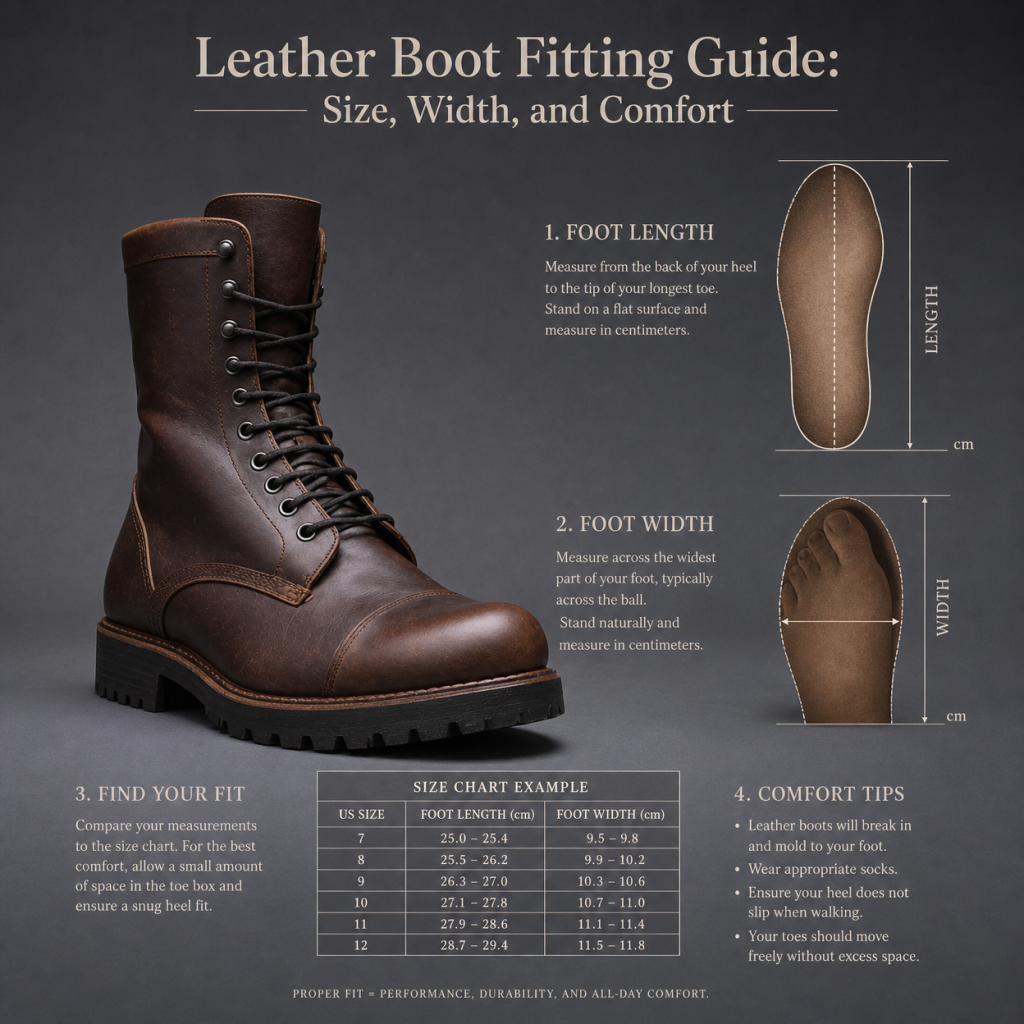
Accurate foot measurement is the foundation of proper boot fitting. Many people continue wearing incorrect shoe sizes for years simply because they have never measured their feet professionally.
The most reliable way to measure your feet is with a Brannock device, commonly available in footwear stores. This tool measures both foot length and width accurately.
Measure at the Right Time
Feet naturally swell throughout the day due to walking and standing. For the most accurate sizing:
- Measure your feet in the afternoon or evening
- Wear the socks you plan to use with the boots
- Stand naturally while measuring
Morning measurements can sometimes lead to purchasing boots that feel too tight later in the day.
Measure Both Feet
Most people have one foot slightly larger than the other. Always fit boots to your larger foot to avoid discomfort.
Ignoring size differences between feet is one of the most common fitting mistakes.
Boot Width Is Just as Important as Length
Many shoppers focus only on boot length while ignoring width entirely. Width plays a critical role in comfort, especially for leather boots that have more structured construction.
Boots that are too narrow can cause:
- Toe compression
- Blisters
- Foot numbness
- Pressure on the sides of the feet
Boots that are too wide may lead to:
- Heel slippage
- Lack of stability
- Friction and rubbing
- Reduced support
Many quality boot manufacturers offer multiple width options, including:
- Narrow (B)
- Standard (D)
- Wide (EE)
- Extra Wide (EEE)
Choosing the proper width ensures your feet remain secure without unnecessary pressure.
Signs Your Boots Are Too Narrow
- Toes feel squeezed together
- Pain along the outer sides of the feet
- Tingling or numbness after walking
- Difficulty flexing the foot naturally
Signs Your Boots Are Too Wide
- Heel lifts excessively while walking
- Foot slides side to side
- Instability when standing
- Frequent rubbing despite thick socks
Width fitting becomes especially important for people with naturally wide feet, high arches, or specific foot conditions.
Toe Room and Proper Foot Position
Your toes should have enough room to move naturally inside the boot without sliding excessively.
A good general rule is to leave approximately half an inch of space between your longest toe and the front of the boot. This prevents toe impact while walking downhill or during long periods of movement.
However, excessive empty space can create instability and heel slipping.
Toe Shape Matters
Different boots feature different toe shapes, including:
- Round toe
- Square toe
- Pointed toe
- Almond toe
Toe shape affects both style and comfort. People with wider forefeet often prefer round or square-toe boots because they provide more natural toe spread.
Pointed boots may look stylish but can feel restrictive during extended wear if improperly sized.
Heel Fit and Slippage
Slight heel movement during the initial break-in period is normal in many leather boots. However, excessive heel slippage indicates an improper fit.
A properly fitted heel should:
- Feel secure
- Lift minimally when walking
- Avoid rubbing aggressively against the back of the foot
Minor heel lift often disappears as the sole flexes and the leather softens. Large amounts of movement, however, usually signal sizing or width problems.
Heel fit is particularly important in pull-on boots such as Chelsea boots or cowboy boots, where laces are unavailable to adjust tightness.
Sock Choice Changes the Fit
The socks you wear dramatically affect how boots fit. Thick wool socks create a much tighter fit than thin cotton socks.
Always try boots on with the exact sock type you intend to wear regularly.
Winter Boots
Cold-weather boots are often worn with:
- Thick wool socks
- Thermal socks
- Layered socks
This requires additional interior space.
Casual Fashion Boots
Fashion-oriented boots may pair better with:
- Thin cotton socks
- Dress socks
- Lightweight performance socks
Trying boots with the wrong sock thickness often leads to sizing mistakes.
Walking Reveals the Real Fit
Standing still inside boots provides limited information. Walking is essential because movement reveals problems that static fitting cannot detect.
When testing boots:
- Walk on different surfaces
- Climb stairs if possible
- Bend naturally at the ball of the foot
- Wear the boots for several minutes
Walking helps identify:
- Pressure points
- Arch discomfort
- Heel slipping
- Toe impact
- Sole flexibility
Never rush the fitting process. A few extra minutes in the store can prevent years of discomfort.
Arch Support and Foot Shape
Every person has a unique foot shape, and arch support significantly affects comfort.
People generally fall into three categories:
- Low arches (flat feet)
- Neutral arches
- High arches
Boots with inadequate arch support can cause fatigue and foot pain during prolonged wear.
Some premium boots include supportive insoles, while others may require aftermarket orthotics for optimal comfort.
Understanding your foot structure helps you choose boots that provide better alignment and support.
Leather Boots Should Feel Secure, Not Tight
One common misconception is that leather boots should fit extremely tight because they will stretch later. This often leads people to buy boots that are too small.
Leather does stretch slightly, especially in width, but not dramatically in length.
Your boots should feel:
- Snug around the midfoot
- Secure at the heel
- Comfortable across the toes
- Stable while walking
You should never rely entirely on stretching to fix painful boots.
Online Boot Shopping Tips
Buying boots online has become increasingly popular, but it introduces additional fitting challenges.
Before ordering online:
- Check the brand’s sizing chart carefully
- Read customer reviews about sizing accuracy
- Research whether the brand runs large or small
- Verify return policies
- Measure your feet accurately at home
Different brands use different sizing standards, so your size may vary between manufacturers.
Many experienced boot buyers recommend ordering multiple sizes when free returns are available.
Conclusion
Proper leather boot fitting is essential for comfort, durability, and long-term satisfaction. Even the most beautifully crafted boots cannot compensate for poor sizing or improper support.
Understanding foot measurement, width selection, toe room, heel fit, and leather break-in behavior helps consumers make smarter purchasing decisions. A well-fitted pair of leather boots should feel supportive, secure, and comfortable while allowing natural movement and flexibility.
Patience during the fitting process is always worthwhile. Taking time to measure correctly, test thoroughly, and evaluate comfort realistically prevents costly mistakes and ensures your boots become reliable companions for years to come.
Leather boots are an investment, and proper fit is the key to fully enjoying their timeless style, craftsmanship, and performance.
