
Post
Leather Boots and Sustainability: Making Responsible Choices
May
Leather boots have long been valued for their durability, craftsmanship, and timeless style. A well-made pair of leather boots can last for decades, developing character and comfort with age. However, modern consumers increasingly ask important questions about the environmental and ethical impact of their purchases. Concerns surrounding animal agriculture, chemical processing, labor conditions, and waste have transformed sustainability into a major factor within the footwear industry.
The leather boot industry occupies a complex position in the sustainability conversation. Leather is a natural material with exceptional longevity, yet its production also involves environmental challenges. Consumers seeking to make responsible choices must navigate these complexities thoughtfully rather than relying on simplistic assumptions.
Understanding sustainability in leather footwear requires looking beyond marketing slogans and examining the full lifecycle of boots—from raw materials and manufacturing processes to durability, repairability, and long-term waste reduction. Responsible purchasing is not simply about finding a “perfect” solution but about making informed decisions that reduce unnecessary environmental harm while supporting better industry practices.
Understanding the Environmental Debate Around Leather
One of the biggest sustainability discussions surrounding leather boots involves animal agriculture. Leather is a byproduct of the meat industry, and livestock farming contributes significantly to environmental concerns such as:
- Greenhouse gas emissions
- Land degradation
- Water consumption
- Deforestation
- Biodiversity loss
These concerns are legitimate and increasingly influence purchasing decisions among environmentally conscious consumers.
Critics argue that leather production indirectly supports industries associated with large environmental footprints. At the same time, supporters note that leather often utilizes hides that would otherwise become waste products from food production.
The issue becomes more complicated when comparing leather to synthetic alternatives. Artificial leather, commonly marketed as “vegan leather,” is frequently made from petroleum-based plastics such as polyurethane (PU) or polyvinyl chloride (PVC). While these materials avoid animal products, they create separate environmental challenges including:
- Fossil fuel dependence
- Microplastic pollution
- Limited biodegradability
- Chemical waste during production
As a result, sustainability discussions surrounding footwear are rarely black and white. Both leather and synthetic materials involve environmental trade-offs, making responsible consumption more important than simply labeling one option as entirely good or bad.
The Importance of Durability and Longevity
Perhaps the strongest sustainability advantage of high-quality leather boots is durability. Fast fashion encourages consumers to buy inexpensive footwear that wears out quickly and ends up in landfills. In contrast, well-constructed leather boots can remain functional for decades with proper care.
This longevity significantly reduces waste and resource consumption over time.
A pair of premium leather boots may initially cost more, but if they last ten or twenty years, their long-term environmental impact can be lower than repeatedly replacing cheap synthetic footwear every year.
Durability supports sustainability in several ways:
- Fewer products are manufactured
- Less packaging waste is created
- Shipping emissions decrease
- Landfill waste is reduced
- Consumers buy less frequently
The concept of “buy less, buy better” has become central to sustainable fashion movements. Instead of prioritizing constant consumption, consumers increasingly value products designed for repair, maintenance, and long-term use.
Leather boots fit naturally into this philosophy because they are often repairable. Soles can be replaced, leather can be conditioned, and damaged components can frequently be restored rather than discarded.
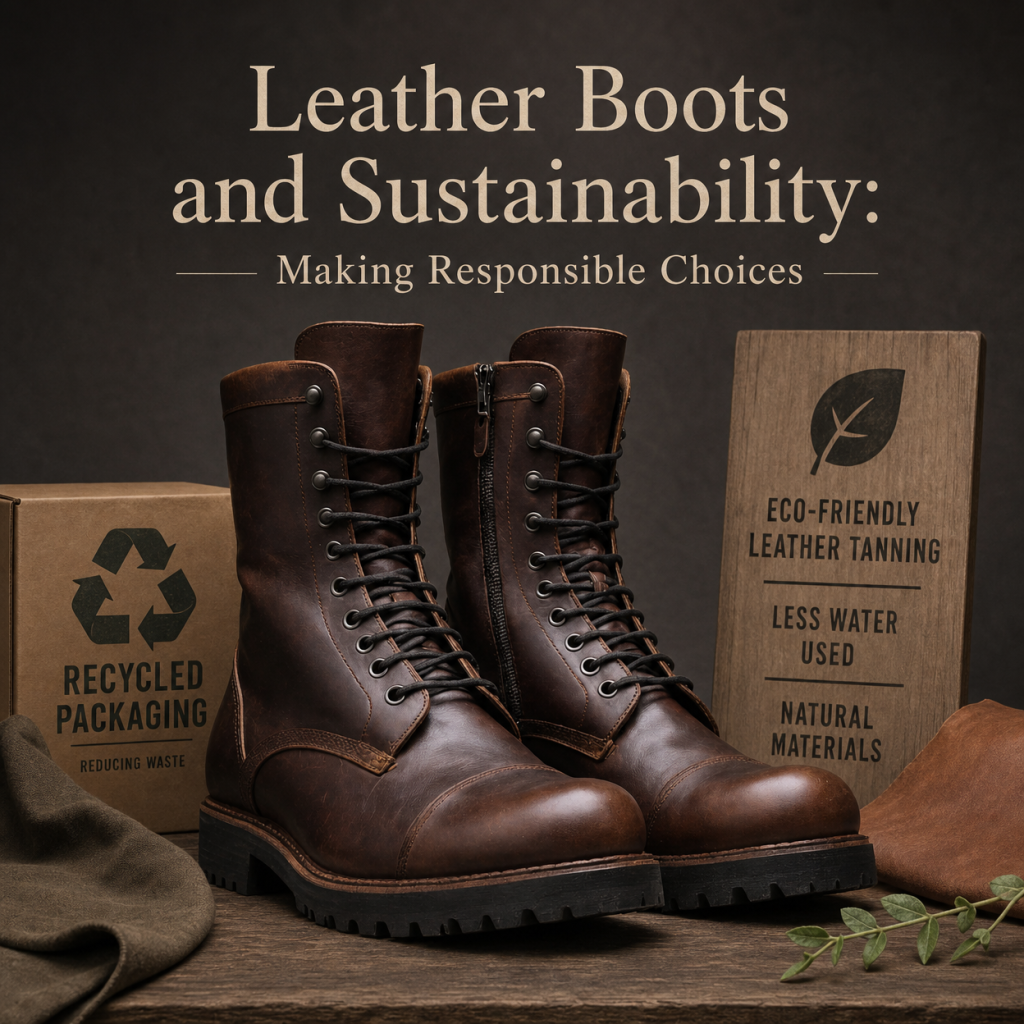
Vegetable-Tanned Leather and Cleaner Production
Traditional leather tanning often relies on chromium salts and other industrial chemicals. While effective and affordable, these processes can create serious environmental pollution if waste is not properly managed.
In response, many environmentally conscious manufacturers have embraced vegetable tanning as a more sustainable alternative.
Vegetable tanning uses natural tannins derived from plant materials such as:
- Tree bark
- Leaves
- Roots
- Fruits
This process requires more time and craftsmanship than chrome tanning, but it reduces dependence on harsh synthetic chemicals.
Benefits of Vegetable-Tanned Leather
Vegetable-tanned leather offers several environmental and aesthetic advantages:
- Lower chemical pollution
- Reduced toxic wastewater
- More natural aging and patina development
- Greater biodegradability
- Richer natural appearance
Consumers who purchase vegetable-tanned leather boots help support cleaner production methods and encourage wider industry adoption of environmentally responsible practices.
Because vegetable tanning is slower and more labor-intensive, these boots are often more expensive. However, many buyers view the added cost as worthwhile due to both environmental benefits and superior aging characteristics.
Ethical Labor and Responsible Manufacturing
Sustainability extends beyond environmental concerns alone. Ethical labor practices also play a critical role in responsible footwear production.
Some low-cost manufacturing operations rely on unsafe working conditions, underpaid labor, and exploitative supply chains. Responsible consumers increasingly want assurance that the people producing their boots are treated fairly and safely.
Many reputable boot manufacturers now provide greater transparency regarding:
- Factory conditions
- Worker wages
- Production locations
- Labor standards
- Supply chain sourcing
Supporting companies committed to ethical manufacturing helps encourage better labor practices throughout the industry.
Consumers can research brands independently and look for certifications or public sustainability reports that demonstrate accountability.
The Rise of Sustainable Leather Alternatives
Innovation within the footwear industry has also introduced alternative materials designed to reduce environmental impact while maintaining durability and style.
Some emerging leather alternatives include materials made from:
- Pineapple fibers
- Mushroom mycelium
- Apple waste
- Cactus leather
- Recycled materials
These alternatives aim to reduce dependence on both animal agriculture and petroleum-based plastics.
However, many sustainable alternatives are still developing in terms of durability and large-scale production capabilities. While promising, some materials may not yet match the lifespan or repairability of high-quality traditional leather.
As technology improves, the market for sustainable boot materials will likely continue expanding, providing consumers with more environmentally conscious options.
Repairability and Circular Fashion
One of the most overlooked sustainability advantages of leather boots is repairability. Many high-quality boots are constructed using methods such as Goodyear welting, allowing worn soles to be replaced multiple times.
Repair culture plays an essential role in reducing waste because it extends product lifespan instead of encouraging disposal.
Common leather boot repairs include:
- Resoling
- Heel replacement
- Stitch repair
- Conditioning and restoration
- Hardware replacement
Repairing boots is significantly more sustainable than discarding them and purchasing new pairs repeatedly.
This philosophy aligns closely with the growing popularity of circular fashion, which emphasizes reuse, restoration, and second-hand ownership.
Vintage and second-hand leather boots have become increasingly desirable because they combine sustainability with unique style and character. Many consumers appreciate that older boots often feature exceptional craftsmanship and high-quality materials difficult to find in modern fast-fashion products.
Buying used leather boots helps reduce demand for new production while giving existing products longer useful lives.
Environmental Certifications and Transparency
As sustainability becomes more important to consumers, environmental certifications provide useful guidance when evaluating leather boot brands.
Responsible companies may participate in certification programs focused on environmental and ethical standards.
Examples include certifications related to:
- Responsible leather sourcing
- Reduced water usage
- Safer chemical management
- Ethical labor practices
- Sustainable forestry for packaging
Consumers should look for brands that openly share information about their sourcing and manufacturing processes rather than relying solely on vague marketing language.
Transparency often indicates genuine commitment to sustainability rather than superficial “greenwashing.”
Caring for Boots Sustainably
Sustainability does not end at the point of purchase. Proper maintenance significantly extends the lifespan of leather boots and reduces unnecessary replacement.
Simple care practices include:
- Cleaning dirt regularly
- Conditioning leather periodically
- Waterproofing when necessary
- Storing boots properly
- Resoling before severe wear develops
Well-maintained leather boots can remain attractive and functional for many years, minimizing environmental impact over time.
Consumers who treat boots as long-term investments rather than disposable fashion items contribute directly to more sustainable consumption patterns.
Balancing Ethics, Practicality, and Personal Values
Sustainable purchasing decisions are deeply personal and often involve balancing multiple priorities. Some consumers prioritize reducing plastic waste, while others focus primarily on animal welfare or labor ethics.
There is no universally perfect material or completely impact-free product. Every manufacturing process involves trade-offs.
The goal of responsible consumption is not perfection but conscious decision-making. Asking thoughtful questions about durability, sourcing, repairability, and long-term value leads to more sustainable outcomes than impulsive or trend-driven purchasing habits.
Consumers can make meaningful differences by:
- Buying fewer, higher-quality products
- Supporting ethical brands
- Choosing repair over replacement
- Researching manufacturing practices
- Maintaining products properly
- Considering second-hand options
These habits collectively contribute to more responsible fashion consumption.
Conclusion
Leather boots and sustainability represent a complex but increasingly important conversation within modern fashion. Environmental concerns surrounding animal agriculture, chemical tanning, labor practices, and waste are valid and deserve careful consideration.
At the same time, high-quality leather boots offer significant sustainability advantages through durability, repairability, and long-term use. Investing in boots designed to last for decades can reduce waste far more effectively than constantly replacing low-quality footwear.
Consumers today have greater power than ever to support responsible manufacturing practices by choosing brands committed to ethical labor, cleaner tanning methods, transparency, and long-lasting craftsmanship.
Ultimately, sustainable fashion is not about achieving perfect environmental neutrality. It is about making informed, thoughtful decisions that prioritize quality, longevity, responsibility, and reduced waste. By approaching leather boot purchases with awareness and intentionality, consumers can enjoy timeless footwear while contributing to a more sustainable future.
