
Post
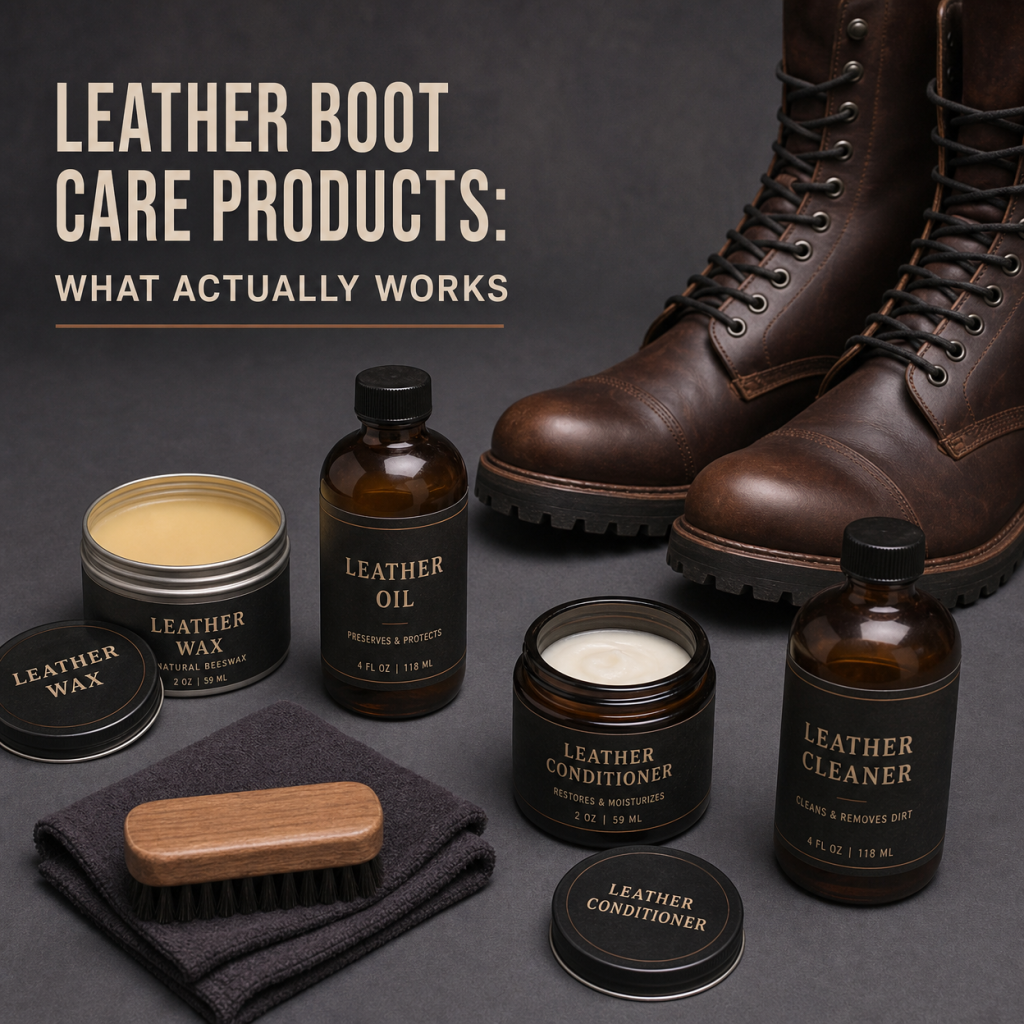
Leather Boot Care Products: What Actually Works
May
Leather Boot Care Products: What Actually Works
The leather boot care market is filled with countless products claiming to “restore,” “protect,” or “revive” leather instantly. From conditioners and waxes to sprays and repair creams, it can be difficult to separate genuinely useful products from marketing hype. The truth is that leather boots do not need complicated treatment routines—what they need is consistent, appropriate care using a small number of effective, proven products.
Understanding which leather care products actually work helps you maintain boots properly, extend their lifespan, and avoid damaging expensive footwear with unnecessary or low-quality treatments. High-quality leather responds best to simple, well-chosen care products applied correctly and consistently.
This guide breaks down the most effective leather boot care products, what they do, and how they contribute to long-term boot health.
Why Leather Care Matters
Leather is a natural material that changes over time. It loses moisture, absorbs environmental elements, and responds to temperature and humidity. Without proper care, leather boots can become:
- Dry and brittle
- Cracked or stiff
- Faded or dull
- Water-damaged
- Structurally weakened
Good leather care does not just improve appearance—it preserves flexibility, strength, and comfort.
The most effective care routine focuses on three key goals:
- Moisturizing the leather
- Protecting it from water and dirt
- Maintaining surface condition and appearance
Leather Conditioners: The Most Important Product
Leather conditioner is the foundation of any proper boot care routine. Among all available products, conditioners provide the most consistent and essential benefits.
Conditioners work by replenishing the natural oils in leather that are lost over time through wear, exposure, and drying conditions.
What Leather Conditioner Does
A quality conditioner:
- Restores moisture to leather fibers
- Prevents cracking and stiffness
- Maintains flexibility
- Extends overall lifespan
- Improves comfort during wear
Conditioning is especially important for boots exposed to:
- Dry climates
- Heat
- Frequent outdoor use
- Long storage periods
Mink Oil and Traditional Conditioners
Mink oil has long been used as a traditional leather treatment. It is effective at softening leather and providing water resistance.
Benefits:
- Deep conditioning
- Softens stiff leather
- Adds some water resistance
- Widely available
Limitations:
- Can darken leather significantly
- May soften leather too much if overused
- Not ideal for all leather finishes
Mink oil is still widely respected, but it should be used carefully depending on the desired appearance and stiffness of the boot.
Modern Leather Conditioners
Modern conditioners are formulated to be more balanced and controlled.
Advantages:
- Better preservation of original color
- Less risk of over-softening leather
- Improved absorption
- More consistent results
These products are generally preferred for fashion boots, dress boots, and premium leather footwear where appearance matters as much as function.
How Often to Condition
Most leather boots benefit from conditioning:
- Every 2–3 months for regular use
- After exposure to water or harsh conditions
- Before long-term storage
Over-conditioning should be avoided, as too much oil can weaken leather structure over time.
Water-Resistant Coatings: Essential Protection
Water is one of leather’s biggest threats. Without protection, moisture can lead to staining, stiffness, and long-term damage.
Water-resistant treatments create a protective barrier that reduces absorption.
Silicone-Based Waterproofing Sprays
Silicone sprays are among the most effective modern waterproofing solutions.
Benefits:
- Strong water resistance
- Invisible finish
- Easy application
- Fast drying time
These sprays allow water to bead on the surface rather than soak into the leather.
Wax-Based Waterproofing
Wax-based products provide a thicker protective layer.
Benefits:
- Strong durability
- Enhanced protection in heavy rain
- Added surface conditioning
Trade-offs:
- Can slightly change leather appearance
- Requires more effort to apply evenly
Wax is often preferred for rugged boots used in outdoor or work environments.
Reapplication Matters
Waterproofing is not permanent.
To maintain effectiveness:
- Reapply every few months
- Apply after deep cleaning
- Reapply after heavy rain exposure
Neglecting reapplication reduces protection over time.
Leather Cleaners: Safe and Effective Maintenance
Cleaning leather boots properly is essential, but using the wrong products can do more harm than good.
Many household cleaners are too harsh for leather and can strip natural oils.
Specialized Leather Cleaners
Leather-specific cleaning products are designed to:
- Remove dirt and grime safely
- Preserve natural oils
- Avoid residue buildup
- Maintain surface integrity
Why Regular Soap Is Risky
Generic soaps or detergents can:
- Dry out leather
- Cause discoloration
- Leave residue
- Damage protective finishes
This is why dedicated leather cleaners are always recommended.
When to Clean Boots
Clean boots when:
- Dirt is visible
- Salt stains appear
- After exposure to mud or rain
- Before conditioning or waterproofing
Cleaning should always come before conditioning for best results.
Leather Repair Creams: Fixing Minor Damage
Leather repair creams are useful for addressing cosmetic imperfections and small surface damage.
These products are designed to blend and smooth out worn areas.
What Repair Creams Can Fix
Repair creams are effective for:
- Light scuffs
- Small scratches
- Color fading
- Minor abrasions
They work by filling surface imperfections and restoring a more uniform appearance.
Limitations of Repair Creams
While helpful, they are not a substitute for structural repair.
They cannot fix:
- Deep cracks
- Structural tears
- Sole damage
- Severe leather breakdown
For major damage, professional cobbler services are required.
Leather Polishes: Appearance Enhancement
Leather polish is often used to improve shine and visual presentation.
Benefits of Polish
- Restores shine
- Enhances color depth
- Adds light protection
- Improves aesthetic finish
Polish is especially useful for:
- Dress boots
- Formal footwear
- Presentation purposes
However, polish is more cosmetic than structural—it does not deeply condition leather.
Leather Protectant Sprays: Extra Defense Layer
Some modern products combine water resistance with stain protection.
These sprays help repel:
- Water
- Dirt
- Salt
- Oil stains
They are especially useful for urban environments where boots are exposed to unpredictable conditions.
What You Actually Don’t Need
The leather care market includes many unnecessary or redundant products.
Often unnecessary items include:
- Overly expensive “miracle” treatments
- Excessive layering of multiple conditioners
- Harsh chemical cleaners
- Duplicate products with identical functions
A simple routine is usually more effective than complex systems.
The Simple Effective Care Routine
Most leather boots only need a basic, consistent routine:
- Clean when dirty using leather-safe cleaner
- Condition every few months
- Apply waterproofing when needed
- Use polish only for appearance enhancement
This approach is enough to maintain high-quality boots for years or even decades.
Matching Products to Boot Type
Different boots require slightly different care approaches.
Work Boots
- Strong waterproofing
- Durable conditioners
- Regular cleaning due to heavy exposure
Hiking Boots
- Frequent waterproofing
- Light conditioning
- Dirt removal after use
Dress Boots
- Gentle conditioners
- Minimal darkening products
- Occasional polishing
Casual Boots
- Balanced maintenance routine
- Moderate conditioning
- Seasonal waterproofing
Choosing products based on usage ensures better results and avoids over-treatment.
Conclusion
Effective leather boot care does not require an overwhelming collection of products. Instead, it depends on understanding which treatments actually work and how they support leather over time.
Leather conditioners remain the most important product, restoring moisture and maintaining flexibility. Water-resistant coatings provide essential protection against environmental damage, while specialized cleaners ensure safe maintenance without harming the leather. Repair creams and polishes offer additional support for appearance and minor restoration.
The most important principle is simplicity. A small number of high-quality, well-applied products will always outperform complex or excessive care routines. When used correctly and consistently, these products significantly extend the lifespan, comfort, and appearance of leather boots.
Good leather boots are built to last—and with the right care products, they can perform at their best for many years while developing character and improving with age.
