
Post
How to Identify Counterfeit Leather Boots
May
Leather boots are often considered long-term investments because of their durability, craftsmanship, and timeless appeal. Unfortunately, the popularity of premium boot brands has created a massive market for counterfeit products. Fake leather boots are increasingly common on online marketplaces, social media shops, and unofficial retail websites. Many counterfeits are designed to closely imitate authentic products, making it difficult for inexperienced buyers to recognize the differences immediately.
Counterfeit boots do more than waste money. They are typically made with inferior materials, poor construction methods, and low-quality synthetic components that wear out quickly and provide inadequate comfort or support. Some fake boots may even pose safety risks due to weak soles, poor traction, or toxic manufacturing materials.
Learning how to identify counterfeit leather boots helps protect consumers from scams while ensuring they receive the quality, durability, and craftsmanship they expect from genuine products. Understanding authentication details such as packaging, leather quality, stitching, branding, and seller credibility allows buyers to shop more confidently and avoid costly mistakes.
This guide explores the most important signs of counterfeit leather boots and explains how to verify authenticity before making a purchase.
Why Counterfeit Boots Are a Serious Problem
The counterfeit footwear industry has grown rapidly due to online shopping and global e-commerce platforms. Fake products are often sold at prices that appear attractive compared to official retail costs, tempting buyers seeking premium brands at lower prices.
However, counterfeit boots usually involve serious compromises:
- Inferior materials
- Poor durability
- Weak construction
- Lack of comfort
- No warranty protection
- Unsafe manufacturing practices
Unlike authentic leather boots that may last for many years, counterfeit versions often deteriorate quickly. Soles separate, stitching fails, synthetic coatings peel, and interior materials break down after limited use.
In many cases, counterfeit boots also exploit unethical labor practices and avoid quality control standards entirely.
Buy from Authorized Retailers
The safest and most reliable way to avoid counterfeit leather boots is purchasing from authorized sellers.
Trusted purchasing sources include:
- Official brand websites
- Authorized retailers
- Established department stores
- Reputable specialty boot shops
Authorized retailers guarantee product authenticity and usually provide warranty support, return policies, and customer service protection.
Risks of Unofficial Sellers
Counterfeit products are especially common on:
- Unverified online marketplaces
- Social media advertisements
- Suspicious discount websites
- Auction platforms with unknown sellers
If a deal appears dramatically cheaper than normal retail pricing, caution is necessary. Premium leather boots rarely receive extreme discounts unless sold through verified clearance events.
Researching seller reputation before purchasing is essential, particularly when shopping online.
Examine Packaging Carefully
Authentic leather boots typically arrive in high-quality packaging that reflects the standards of the brand.
Signs of Genuine Packaging
Authentic packaging often includes:
- Durable product boxes
- Clear logos and branding
- Proper product labels
- Care instruction booklets
- Warranty information
- High-quality printing
Premium brands usually invest heavily in presentation because packaging contributes to the customer experience.
Common Counterfeit Packaging Problems
Fake packaging may show:
- Misspelled words
- Blurry printing
- Incorrect logos
- Thin cardboard
- Inconsistent fonts
- Poor color accuracy
Small errors in packaging are among the easiest ways to detect counterfeit products.
If branding appears careless or inconsistent, the boots themselves are likely fake as well.
Inspect the Leather Quality
One of the clearest differences between genuine and counterfeit boots is the quality of the leather itself.
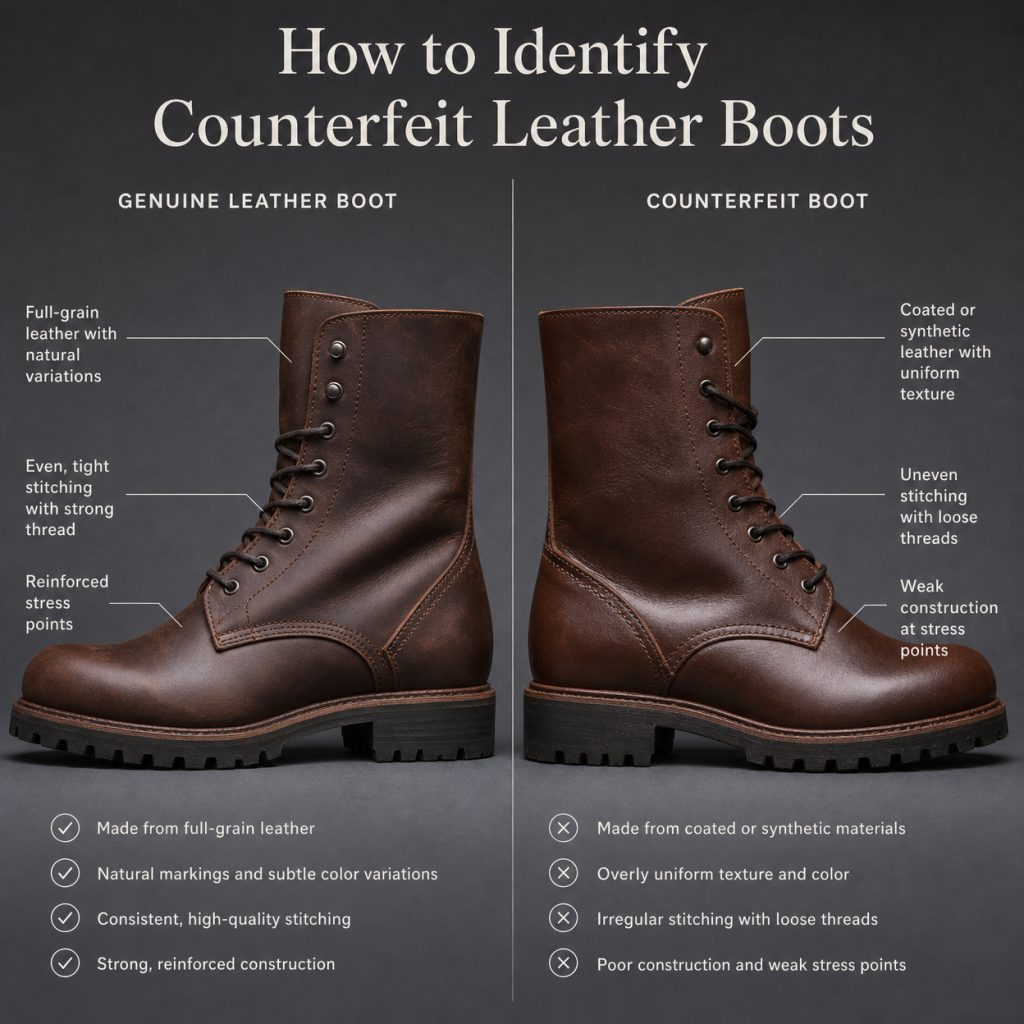
Authentic leather possesses natural texture, subtle imperfections, and organic variation. No two genuine leather surfaces look completely identical.
Characteristics of Genuine Leather
Real leather usually feels:
- Soft yet durable
- Flexible
- Slightly textured
- Natural and warm
- Rich in depth and grain
Natural leather often develops a unique patina over time, adding character with use.
Signs of Fake Leather
Counterfeit or synthetic leather often appears:
- Overly smooth
- Plastic-like
- Artificially shiny
- Uniform in texture
- Rigid or stiff
Fake leather may also emit a strong chemical or plastic odor rather than the subtle earthy smell associated with genuine leather.
Touch and Flexibility Test
Running your hand across the surface can reveal important clues.
Authentic leather generally:
- Feels supple
- Shows slight grain variation
- Bends naturally without cracking
Synthetic materials may feel cold, rigid, or unnaturally smooth.
Check Stitching Precision
High-quality leather boots rely on precise stitching for both durability and appearance.
Authentic premium boots feature carefully executed stitching with consistent spacing and strong thread tension.
Signs of Authentic Stitching
Look for:
- Even stitch spacing
- Straight stitching lines
- Tight thread tension
- Clean finishing
- Reinforced stress points
Premium manufacturers maintain strict quality control standards, making sloppy stitching uncommon.
Counterfeit Stitching Problems
Fake boots often display:
- Uneven stitches
- Loose threads
- Crooked lines
- Inconsistent spacing
- Poorly finished seams
Weak stitching is more than a cosmetic issue—it significantly affects long-term durability.
Examine Logos and Branding
Counterfeit manufacturers often struggle to replicate logos accurately.
Carefully inspect:
- Brand embossing
- Tags
- Labels
- Metal hardware
- Sole markings
Warning Signs Include:
- Slightly altered logos
- Inconsistent font styles
- Incorrect spacing
- Poor embossing quality
- Cheap hardware finishes
Luxury and heritage boot brands typically maintain extremely consistent branding standards across all products.
Even small logo inaccuracies may indicate counterfeit production.
Evaluate the Sole Construction
The sole often reveals major differences between authentic and counterfeit boots.
Quality leather boots use durable materials and carefully executed construction methods such as:
- Goodyear welting
- Blake stitching
- Strong rubber bonding
- Reinforced midsoles
Authentic Soles Typically Feature:
- Precise alignment
- Durable tread patterns
- Strong attachment
- Quality materials
Counterfeit boots may have:
- Weak glue residue
- Misaligned soles
- Thin rubber
- Poor traction
- Cheap foam materials
Examining the edge where the sole meets the upper can reveal construction quality immediately.
Look at Interior Quality
Many counterfeiters focus heavily on exterior appearance while neglecting the interior details.
Authentic boots usually include:
- Comfortable linings
- Proper padding
- Quality insoles
- Neatly finished interiors
Counterfeit interiors may show:
- Rough unfinished surfaces
- Thin materials
- Weak adhesives
- Poor cushioning
- Misaligned labels
The inside of the boot often exposes shortcuts taken during manufacturing.
Compare Product Details to Official Listings
Before purchasing, compare the product carefully against images and descriptions from the official manufacturer.
Check for consistency in:
- Leather color
- Stitching patterns
- Hardware placement
- Sole design
- Logo positioning
- Packaging style
Counterfeit products frequently contain small design inaccuracies that differ from official models.
Manufacturer websites are valuable references when verifying details.
Verify Serial Numbers and Authentication Codes
Some premium boot brands include authentication features such as:
- Serial numbers
- QR codes
- Product registration cards
- RFID tags
If available, verify these codes directly through official brand systems.
Be cautious if:
- Codes are missing
- Numbers appear duplicated
- Authentication fails
- Labels look tampered with
However, not all authentic boots include digital verification systems, so absence alone does not necessarily indicate counterfeit status.
Beware of Unrealistic Pricing
One of the strongest counterfeit warning signs is pricing that appears too good to be true.
High-quality leather boots involve expensive materials, skilled labor, and durable construction. Genuine premium boots rarely sell at extremely low prices.
Common Scam Tactics Include:
- Massive “limited-time” discounts
- Fake clearance sales
- Social media flash promotions
- Replica websites mimicking official stores
While occasional sales are normal, dramatic price reductions on premium products should trigger skepticism.
Online Shopping Safety Tips
When purchasing leather boots online:
- Research seller reviews carefully
- Check return policies
- Verify contact information
- Look for secure payment methods
- Avoid suspiciously new websites
- Search for independent customer feedback
Legitimate retailers usually provide transparent policies and responsive customer support.
Poor communication or vague business information may indicate fraudulent sellers.
Social Media Counterfeit Risks
Social media platforms have become major channels for counterfeit footwear sales.
Fake advertisements often use:
- Stolen product photos
- Luxury branding
- Unrealistic discounts
- Fake customer reviews
Consumers should avoid impulse purchases through unfamiliar social media stores without proper verification.
Why Authenticity Matters Beyond Fashion
Authentic leather boots offer more than status or branding.
Genuine products provide:
- Better comfort
- Safer construction
- Higher durability
- Proper support
- Long-term repairability
- Manufacturer warranties
Counterfeit boots often fail to meet even basic quality standards.
In some cases, low-quality adhesives, dyes, or synthetic materials may create health or safety concerns.
Conclusion
Counterfeit leather boots are increasingly common, especially in online marketplaces where visual imitation can deceive unsuspecting buyers. Learning how to identify fake products helps protect consumers from financial loss, poor-quality footwear, and unsafe construction.
Authentic leather boots reveal their quality through superior materials, precise stitching, natural leather texture, proper branding, and professional packaging. Purchasing from authorized retailers remains the safest way to guarantee authenticity and receive proper customer support.
Careful inspection of leather quality, stitching, logos, soles, packaging, and seller credibility dramatically reduces the risk of purchasing counterfeit products. While fake boots may imitate appearance, they rarely replicate the craftsmanship, durability, and comfort of genuine leather footwear.
By shopping carefully and understanding authentication markers, consumers can invest confidently in leather boots that deliver the long-lasting quality and performance they expect.
