
Post
Leather Boot Storage and Organization Solutions
May
Leather boots are more than just footwear. For many people, they represent a long-term investment in style, comfort, craftsmanship, and durability. High-quality leather boots can last for decades when cared for properly, but even the finest boots can deteriorate quickly if stored incorrectly. Cracked leather, warped shapes, mildew growth, fading, and unpleasant odors are often the result of poor storage habits rather than normal wear.
Proper storage and organization play a critical role in preserving the condition, appearance, and lifespan of leather boots. Whether you own a single pair of everyday work boots or an extensive collection of seasonal fashion boots, understanding how to store them correctly ensures they remain comfortable, attractive, and ready to wear whenever needed.
Good storage practices protect leather from moisture, temperature fluctuations, pests, dust, and unnecessary stress on the boot’s structure. At the same time, organized storage solutions help maintain accessibility and prevent clutter while showcasing your collection effectively.
This guide explores the most effective leather boot storage and organization solutions, helping you protect your investment and keep your boots in excellent condition for years to come.
Why Proper Boot Storage Matters
Leather is a natural material that responds to environmental conditions. Unlike synthetic materials, leather can dry out, absorb moisture, crack, warp, or develop mold if exposed to improper storage environments.
Improper storage may cause:
- Permanent creasing
- Leather cracking
- Sole separation
- Mildew and mold growth
- Odor buildup
- Color fading
- Misshapen boot shafts
- Dry or brittle leather
Many people focus heavily on cleaning and conditioning their boots but overlook storage entirely. However, even perfectly maintained boots can suffer damage if left in damp basements, sealed plastic containers, or overcrowded closets.
Proper storage protects both the leather and the structural integrity of the boots while reducing unnecessary wear between uses.
Always Clean Boots Before Storage
One of the most important storage rules is to clean boots thoroughly before putting them away.
Dirt, mud, salt, and dust can trap moisture against the leather surface and gradually cause damage during storage. Over time, these contaminants may stain the leather, weaken stitching, or encourage mildew growth.
Basic Cleaning Before Storage
Before storing leather boots:
- Remove loose dirt with a soft brush
- Wipe surfaces with a damp cloth
- Clean soles and welt areas carefully
- Remove any salt stains or mud residue
- Allow the boots to air dry completely
Never store dirty boots for extended periods, especially after exposure to rain, snow, or mud.
Cleaning also helps identify any issues such as loose stitching, sole damage, or drying leather that should be addressed before long-term storage.
Allow Boots to Dry Completely
Moisture is one of leather’s biggest enemies during storage. Even small amounts of trapped moisture can create ideal conditions for mildew, odor, and bacterial growth.
After cleaning or wearing boots in wet conditions:
- Let them dry naturally
- Keep them away from direct heat sources
- Allow airflow around the boots
- Avoid storing them immediately
Direct heat from radiators, hair dryers, or heaters can dry leather too aggressively, causing stiffness and cracking. Instead, allow boots to dry slowly at room temperature.
Proper drying is especially important in humid climates or during rainy seasons.
Conditioning Leather Before Long-Term Storage
Leather naturally loses moisture over time, especially during extended periods without use. Conditioning before storage helps preserve flexibility and prevents the material from becoming brittle.
A quality leather conditioner replenishes oils and creates a protective barrier against drying.
Benefits of Conditioning Before Storage
Conditioning leather boots before storing them:
- Prevents cracking
- Maintains softness
- Reduces stiffness
- Preserves appearance
- Helps prevent excessive drying
Apply conditioner evenly using a soft cloth and allow it to absorb fully before placing the boots into storage.
Over-conditioning should also be avoided, as excessive oils can weaken leather fibers or attract dust.
Maintaining Shape with Boot Trees and Stuffing
Leather boots naturally crease and fold over time. Without proper support during storage, they may develop permanent wrinkles, collapsed shafts, or distorted shapes.
Using boot trees or stuffing materials helps maintain the original structure of the boots.
Boot Trees
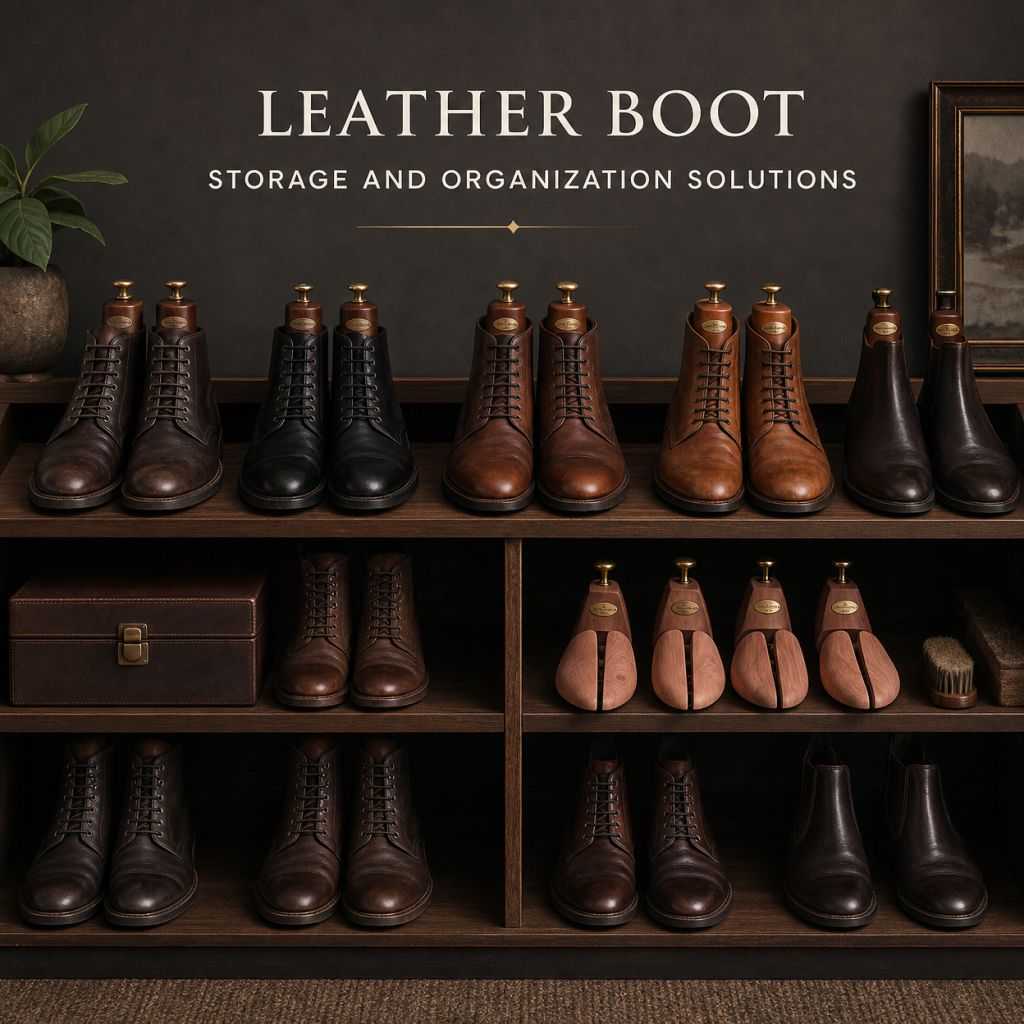
Boot trees are specialized inserts designed to preserve boot shape. High-quality cedar boot trees offer additional benefits such as:
- Moisture absorption
- Odor reduction
- Pest deterrence
- Shape retention
Boot trees are especially valuable for tall boots, dress boots, and premium leather footwear.
Newspaper Stuffing
For a more affordable solution, clean newspaper works surprisingly well.
Stuffing boots with newspaper:
- Helps maintain shape
- Absorbs residual moisture
- Prevents shaft collapse
- Reduces creasing
When using newspaper:
- Avoid glossy or colored ink pages
- Replace damp paper if necessary
- Ensure stuffing is clean and dry
This simple method is highly effective for seasonal storage.
Avoid Sealed Plastic Containers
Many people assume sealed plastic storage bins provide ideal protection. However, leather requires airflow to remain healthy.
Plastic containers can trap humidity and create moisture buildup, leading to:
- Mildew
- Mold growth
- Unpleasant odors
- Leather deterioration
Instead of airtight plastic storage, choose breathable solutions that allow air circulation.
Better Storage Options Include:
- Cloth dust bags
- Open shelving
- Wooden shoe racks
- Breathable fabric organizers
- Ventilated storage cabinets
Proper airflow prevents moisture accumulation while still protecting boots from dust and sunlight.
Closet Organization for Leather Boots
Closet organization is essential for maintaining both accessibility and boot condition. Tossing boots into crowded piles often leads to scratches, crushed shafts, and unnecessary wear.
Shoe Racks and Shelving
Dedicated shoe racks are among the best storage solutions for leather boots.
Benefits include:
- Improved airflow
- Easy visibility
- Shape preservation
- Reduced clutter
- Better organization by season or style
Tall shelving units work particularly well for knee-high or cowboy boots that require vertical support.
Separate Boots by Usage
Organizing boots by purpose makes storage more practical. Common categories include:
- Work boots
- Casual everyday boots
- Dress boots
- Winter boots
- Hiking boots
- Fashion boots
This system improves accessibility while helping you monitor wear patterns and maintenance needs.
Cedar Blocks and Natural Odor Control
Cedar wood has long been used in footwear storage because of its natural protective properties.
Cedar blocks, chips, or inserts help:
- Absorb moisture
- Reduce odors
- Repel insects and pests
- Add a pleasant natural scent
Placing cedar near stored boots creates a healthier storage environment without relying on artificial chemicals or sprays.
Unlike synthetic deodorizers, cedar provides gentle moisture management while preserving leather naturally.
Climate-Controlled Storage Is Ideal
Environmental conditions greatly influence leather longevity. Extreme temperatures and humidity fluctuations accelerate aging and damage.
Ideal Storage Conditions
Leather boots should ideally be stored in environments that are:
- Cool
- Dry
- Well-ventilated
- Away from direct sunlight
- Stable in temperature
Excessive heat can dry leather excessively, while high humidity encourages mold and mildew.
Basements, garages, attics, and outdoor sheds are often poor storage choices because they experience dramatic temperature and moisture changes.
Climate-controlled closets or indoor shelving systems provide much safer conditions for long-term preservation.
Seasonal Storage Tips
Many people rotate boots seasonally, especially in regions with changing weather conditions.
Winter Boot Storage
Before storing winter boots:
- Remove salt residue carefully
- Dry thoroughly after snow exposure
- Condition leather generously
- Insert boot trees or stuffing
Salt left on leather during storage can cause severe drying and discoloration.
Summer Storage
Warm-weather storage requires protection from:
- Excessive heat
- Direct sunlight
- Dust accumulation
- Humidity buildup
Breathable dust bags work particularly well during summer months.
Avoid Stacking Heavy Items on Boots
Leather boots should never be crushed beneath heavy objects during storage.
Pressure can cause:
- Permanent shape distortion
- Bent shafts
- Creased leather
- Sole deformation
Tall boots are especially vulnerable to shaft collapse when improperly stacked.
Provide enough space around stored boots to maintain their natural shape.
Display Storage for Boot Collectors
For enthusiasts with larger collections, display-oriented storage can combine organization with aesthetics.
Open shelving, glass cabinets, and custom boot racks allow collectors to:
- Showcase their boots visually
- Improve accessibility
- Monitor condition easily
- Encourage proper maintenance
Well-organized displays also reduce accidental damage caused by overcrowded storage spaces.
Collectors often organize displays by:
- Leather color
- Brand
- Boot style
- Seasonal usage
- Formality level
This creates both functional and visually appealing storage systems.
Traveling and Temporary Storage
When traveling with leather boots:
- Use boot bags for protection
- Stuff boots to maintain shape
- Avoid compressing them tightly in luggage
- Clean and air out boots after travel
Temporary storage during travel is important because confined luggage spaces can trap moisture and distort leather.
Portable boot organizers are useful for maintaining condition during extended trips.
Conclusion
Proper leather boot storage is essential for preserving comfort, appearance, and longevity. Even premium leather boots can suffer significant damage if exposed to poor storage conditions, excess moisture, or improper organization.
Simple habits such as cleaning boots before storage, conditioning leather regularly, maintaining shape with boot trees, and choosing breathable storage environments make a substantial difference over time.
Well-organized storage systems not only protect your investment but also improve accessibility and extend the life of your footwear collection. Whether you own rugged work boots, elegant dress boots, or vintage leather styles, responsible storage practices ensure they remain in excellent condition season after season.
Leather boots are built to last, but proper storage is what allows them to truly achieve their full lifespan. With thoughtful organization and consistent care, your boots can remain durable, comfortable, and visually impressive for many years to come.
