
Post
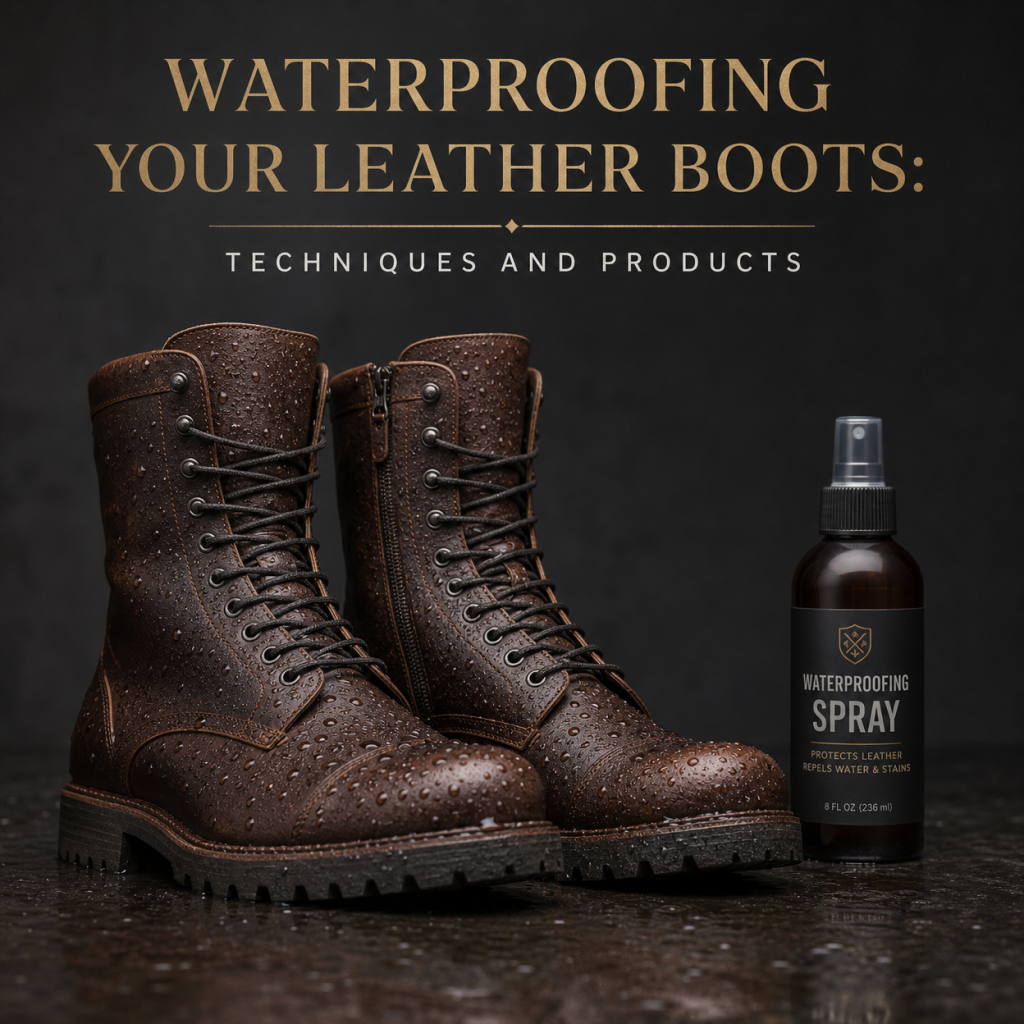
Waterproofing Your Leather Boots: Techniques and Products
May
Waterproofing Your Leather Boots: Techniques and Products
Water is one of the biggest threats to leather boots. Unlike dirt or scratches—which can often be cleaned or polished away—water can permanently change the structure of leather. It can leave stains, cause stiffness, weaken fibers, and in severe cases, lead to cracking or mildew growth. That’s why waterproofing is not optional if you plan to wear leather boots in real-world conditions.
The goal of waterproofing is not to make boots invincible, but to slow down water absorption, reduce damage risk, and keep leather flexible and healthy for as long as possible.
1. Water-Resistant vs Waterproof: Understanding the Difference
A common mistake is assuming all “waterproof” claims mean the same thing. In reality, there is a major difference between water-resistant and waterproof boots.
Water-Resistant Boots
Water-resistant boots:
- Repel light rain and splashes
- Handle short exposure to moisture
- Eventually absorb water if exposure continues
- Rely on leather treatment or coatings
Most premium leather boots fall into this category.
Waterproof Boots
Waterproof boots:
- Block water penetration completely
- Often include internal membranes (like technical liners)
- Can handle heavy rain or submersion better
- Usually sacrifice some breathability
True waterproof leather boots are less common and often more expensive.
Key takeaway
Most leather boots are not naturally waterproof, even if they feel durable. They require treatment and maintenance to stay protected.
2. Why Waterproofing Matters
Without protection, water can cause several long-term problems:
- Dark stains that never fully fade
- Leather hardening after drying
- Loss of natural oils in the material
- Cracking over time
- Mold or mildew in humid environments
- Weakening of stitching and structure
Even occasional exposure adds up over time. Waterproofing is about prevention, not repair.
3. Conditioning: The First Layer of Protection
Leather conditioner is the foundation of boot care. While it is not a full waterproofing solution, it plays a critical role in moisture resistance.
How it works
Conditioners:
- Replenish natural oils in leather
- Keep fibers flexible
- Reduce water absorption rate
- Prevent dryness and cracking
Well-conditioned leather naturally resists water better than dry leather.
When to use
- Every 2–6 months depending on usage
- More frequently in dry or hot climates
- After exposure to heavy rain (once dry)
Conditioning is the baseline step before applying stronger waterproofing products.
4. Wax-Based Waterproofing Products
Wax is one of the oldest and most effective methods for waterproofing leather boots.
How wax works
Wax products:
- Form a physical barrier on the leather surface
- Block water from penetrating
- Add slight stiffness and durability
- Improve resistance in harsh weather
Common examples include beeswax-based or petroleum-based treatments.
Advantages
- Strong water protection
- Long-lasting effect
- Good for heavy-use boots
- Enhances rugged durability
Trade-offs
- Can darken leather color
- Reduces breathability slightly
- Changes the natural finish of leather
Wax is ideal for work boots or outdoor boots where performance matters more than appearance.
5. Mink Oil and Natural Oils
Products like mink oil are widely used for waterproofing leather boots.
How they work
Mink oil:
- Penetrates deep into leather fibers
- Softens material
- Creates water-resistant barrier from within
- Helps restore dried leather
Advantages
- Deep conditioning effect
- Improves flexibility
- Good for older or dry boots
- Provides moderate water resistance
Limitations
- Can darken leather significantly
- May over-soften structured boots
- Not as strong as wax in heavy rain
Mink oil is best for maintenance and restoration rather than extreme waterproofing.
6. Silicone-Based Waterproof Sprays
Modern waterproofing often uses silicone-based sprays or treatments.
How they work
Silicone sprays:
- Create a thin, invisible protective layer
- Repel water without heavy buildup
- Maintain original leather appearance
- Dry quickly after application
Advantages
- Easy to apply
- Lightweight protection
- Does not heavily alter leather texture
- Good for casual boots and everyday use
Limitations
- Needs frequent reapplication
- Less durable than wax in harsh conditions
- May wear off quickly with friction
This is a popular option for city wear or light rain protection.
7. Waxed Leather Boots: Built-In Protection
Some boots are made using waxed or oiled leather from the start.
What makes them different
Waxed leather:
- Already infused with protective oils or wax
- Naturally repels water better than untreated leather
- Develops unique aging patterns over time
- Requires less external treatment
Benefits
- Strong baseline water resistance
- Low maintenance compared to raw leather
- Attractive rugged appearance
- Improved durability in wet conditions
Maintenance requirement
Even waxed leather still needs:
- Occasional re-waxing
- Cleaning after heavy use
- Proper storage to prevent drying
It is not maintenance-free, but it is more resilient by design.
8. Application Techniques: Doing It Right
Proper application matters as much as the product itself.
Step-by-step process
- Clean boots thoroughly
- Remove dirt and dust
- Use a soft brush or damp cloth
- Let boots dry completely
- Never apply waterproofing on wet leather
- Apply product evenly
- Use small circular motions
- Cover seams and stress points
- Allow absorption or drying time
- Usually several hours or overnight
- Buff excess product if needed
- Especially for wax-based treatments
Proper application ensures even protection and avoids patchy results.
9. How Often Should You Waterproof Boots?
Frequency depends on usage:
- Light city use → every 4–6 months
- Frequent rain exposure → every 2–3 months
- Heavy outdoor/work use → monthly or as needed
Signs you need reapplication:
- Water no longer beads on surface
- Leather absorbs moisture quickly
- Boots feel dry or stiff
- Visible wear on protective coating
10. Common Waterproofing Mistakes
Many people accidentally damage their boots while trying to protect them.
Mistakes to avoid
- Applying too much product at once
- Using waterproofing on dirty leather
- Mixing multiple products without cleaning first
- Overusing oils (can weaken structure)
- Expecting permanent waterproofing
Waterproofing is maintenance, not a one-time solution.
11. Breathability vs Protection Trade-Off
A key concept in leather boot care is balance.
- More waterproofing → less breathability
- Less waterproofing → more comfort but higher risk
For daily use, full waterproof sealing is not always ideal because it can trap heat and moisture inside the boot.
The best approach is:
Moderate waterproofing + regular maintenance = optimal performance
12. Real-World Strategy for Protection
Instead of relying on a single method, most experienced boot users combine:
- Regular conditioning
- Occasional wax or spray treatment
- Proper drying habits after exposure
- Careful storage in dry environments
This layered approach gives the best long-term protection.
Conclusion
Waterproofing leather boots is not about making them completely immune to water—it’s about controlling exposure and minimizing damage over time. Leather is a natural material, and like all natural materials, it responds to its environment.
The most effective strategy combines:
- Conditioning to maintain flexibility
- Wax or oil treatments for stronger barriers
- Silicone sprays for lightweight protection
- Consistent maintenance habits
When done correctly, waterproofing allows leather boots to perform in real-world conditions while still aging beautifully. Instead of fearing rain, you protect your boots in a way that lets them adapt, evolve, and last for years without losing their character or structure.
