
May
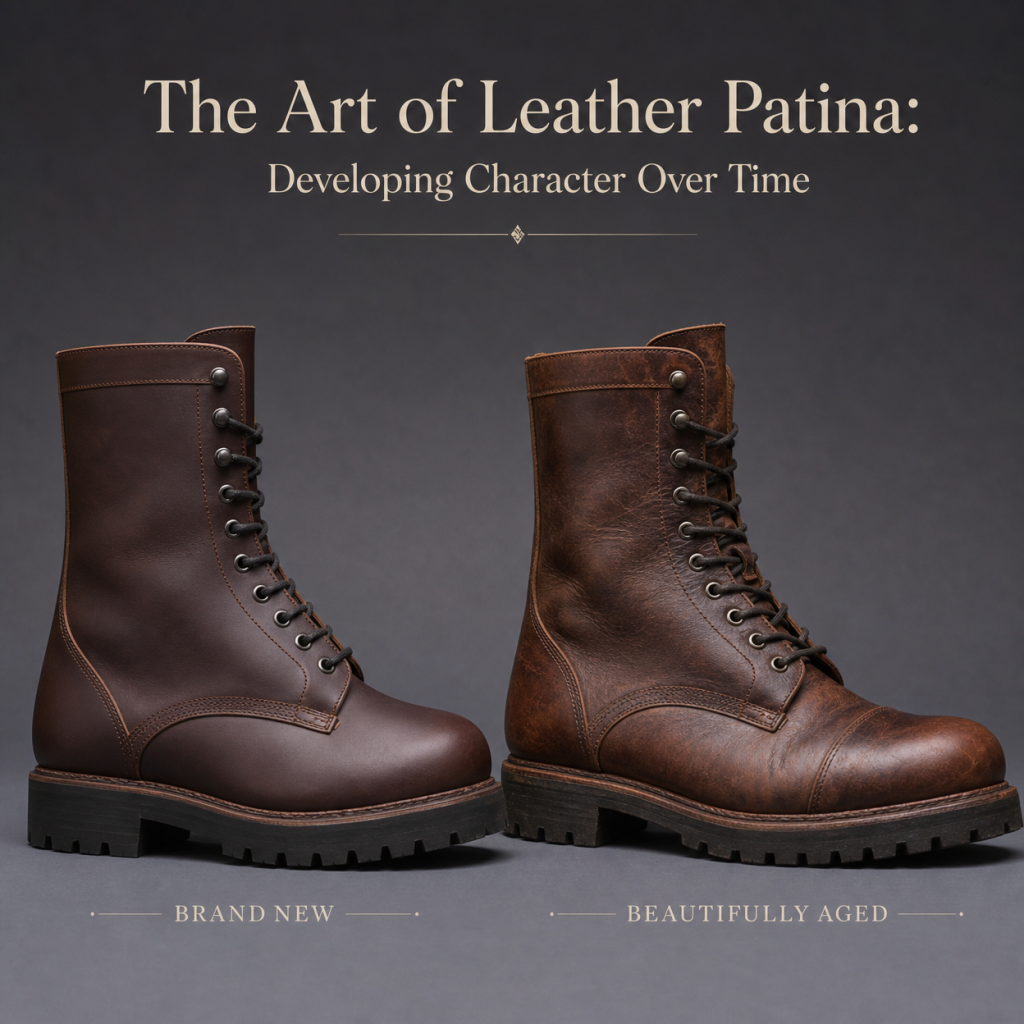
The Art of Leather Patina: Developing Character Over Time
One of the most fascinating and rewarding aspects of owning quality leather boots is watching them age. Unlike synthetic materials that simply wear out, natural leather—especially full-grain Leather Patina —evolves. Over time, it develops what is known as patina, a natural transformation in color, texture, and surface character that makes each pair of boots increasingly unique.
Patina is often considered the “personality” of Leather boots . It reflects how the boots have been used, where they’ve been worn, and how they’ve been cared for. Instead of looking worn-out, well-aged Leather Patina often look richer, deeper, and more visually interesting than when they were new.
This is one of the key reasons leather boots are considered long-term investments rather than disposable footwear.
What Patina Actually Means
Patina refers to the gradual changes that occur in leather over time due to:
- Exposure to air and sunlight
- Contact with oils from skin and socks
- Moisture and drying cycles
- Repeated bending and movement
- Environmental conditions like dust and temperature
These factors slowly transform the surface of the leather in subtle but meaningful ways.
Instead of staying static, leather becomes a living material that records its usage history visually.
Why Full-Grain Leather Develops the Best Patina
Not all leather types age in the same way. The most beautiful patina typically develops on full-grain Leather boots , which is the highest quality layer of the hide.
Characteristics of Full-Grain Leather
- Natural grain structure remains intact
- No heavy sanding or surface correction
- Strong fiber density
- Natural imperfections preserved
Because of this, full-grain leather reacts more authentically to wear.
Why It Ages Better
Full-grain leather:
- Absorbs oils gradually
- Darkens and enriches in color over time
- Retains structural strength
- Develops depth instead of surface damage
Lower-quality leathers often have artificial coatings that crack or peel rather than develop patina, making them look worse as they age.
The Beginning of Patina: First Wear Changes
Patina formation starts immediately the first time boots are worn.
Early Changes Include:
- Slight softening of stiff leather
- Small creases forming at flex points
- Minor shifts in surface sheen
- Subtle color deepening in high-contact areas
Even within the first few wears, Leather Patina begins responding to the shape and movement of the foot.
Internal Influence
Inside the boot, natural oils from:
- Skin
- Socks
- Body heat
begin interacting with the Leather Patina lining, contributing to early conditioning from within.
Environmental Exposure and Its Effects
External conditions also play a major role in patina development.
Sunlight
UV exposure gradually:
- Deepens color tones in some leathers
- Lightens or fades certain finishes
- Enhances contrast between worn and protected areas
This creates natural visual variation across the surface.
Air and Oxidation
Leather Patina slowly reacts with oxygen in the air, leading to:
- Gradual darkening
- Increased richness in tone
- Subtle surface changes
This process happens slowly but continuously over years.
Weather Conditions
Different environments influence patina in different ways:
- Dry climates → more pronounced creasing and texture
- Humid climates → softer, smoother aging
- Wet exposure → darker, uneven tonal variation (if properly cared for)
Each environment contributes to a unique aging profile.
Color Transformation Over Time
One of the most noticeable aspects of patina is color change.
Brown Leather
Brown leather often becomes:
- Deeper
- Warmer
- Richer in tone
High-contact areas like the toe box and heel may darken faster, creating natural contrast.
Black Leather
Black leather may:
- Develop a subtle gray undertone
- Gain a soft sheen
- Show highlights on edges and creases
Even black leather reveals depth over time, though changes are more subtle.
Tan and Light Leathers
Lighter leathers tend to:
- Darken gradually
- Show stronger contrast from wear points
- Develop a vintage appearance faster
These boots often show patina most dramatically.
Creasing: The Signature of Wear
One of the most defining features of patina is creasing.
As boots flex during walking:
- Leather folds at natural movement points
- Permanent creases form over time
- Patterns reflect the wearer’s gait and foot shape
Common Crease Zones
- Toe box
- Instep
- Ankle flex area
These creases are not flaws—they are signatures of use.
Why Creases Matter
Creases:
- Make each pair unique
- Reflect real-life movement
- Add depth and texture to appearance
No two individuals create identical crease patterns, which is why every pair of aged boots is one-of-a-kind.
Scuffs and Imperfections: From Damage to Character
In new boots, scuffs are often seen as damage. In aged leather, they become part of the story.
How Scuffs Transform Over Time
- Minor scratches blend into the surface
- Color variations reduce harsh visibility
- Texture becomes more natural and layered
Instead of standing out, imperfections integrate into the overall appearance of the boot.
This transformation is one of the most distinctive aspects of leather patina.
Softening and Texture Evolution
As leather ages, it naturally becomes softer.
What Causes Softening
- Repeated flexing during walking
- Absorption of natural oils
- Environmental exposure
- Regular conditioning
Results of Softening
- Improved comfort
- Greater flexibility
- Reduced stiffness
- More personalized fit
This is why older Leather Patina boots often feel significantly more comfortable than new ones.
The Uniqueness of Every Pair
Perhaps the most important aspect of patina is individuality.
Even if two pairs of boots:
- Come from the same manufacturer
- Use the same leather
- Are worn for the same amount of time
They will still age differently.
Reasons for This Uniqueness
- Different walking styles
- Different environments
- Different care routines
- Different usage frequency
This means every pair of Leather Patina boots becomes a personal record of its owner’s lifestyle.
Patina vs Wear and Tear
It’s important to distinguish between beautiful aging and actual damage.
Positive Patina Includes:
- Smooth color transitions
- Natural creasing
- Soft sheen development
- Blended scuffs
True Damage Includes:
- Deep cracks
- Structural failure
- Severe peeling
- Sole separation
Good maintenance helps ensure boots develop patina, not deterioration.
How to Encourage Beautiful Patina
Patina is natural, but it can be guided.
Best Practices
- Wear boots regularly
- Clean gently, not aggressively
- Condition moderately
- Allow natural drying after exposure
- Avoid over-polishing (which can mask patina)
Over-care can sometimes prevent patina from developing naturally.
Emotional Value of Patina
Beyond aesthetics, patina often carries emotional significance.
A well-aged pair of boots may reflect:
- Travel experiences
- Daily routines
- Work history
- Personal milestones
This is why many people become attached to their leather boots over time—they are not just objects, but records of lived experience.
Conclusion
The art of leather patina is what truly separates Leather Patina boots from synthetic footwear. While synthetic materials degrade over time, leather evolves. Through exposure to the environment, natural oils, movement, and time, boots develop unique textures, colors, and character that cannot be artificially replicated.
Full-grain leather, in particular, rewards long-term wear with depth, richness, and individuality. Creases form, colors shift, and imperfections blend into a visual story that is completely unique to the wearer.
Ultimately, patina transforms leather boots from simple footwear into personal artifacts. Each pair becomes a reflection of time, use, and experience—growing more beautiful not in spite of age, but because of it.
